
Filled-in black heart shape.

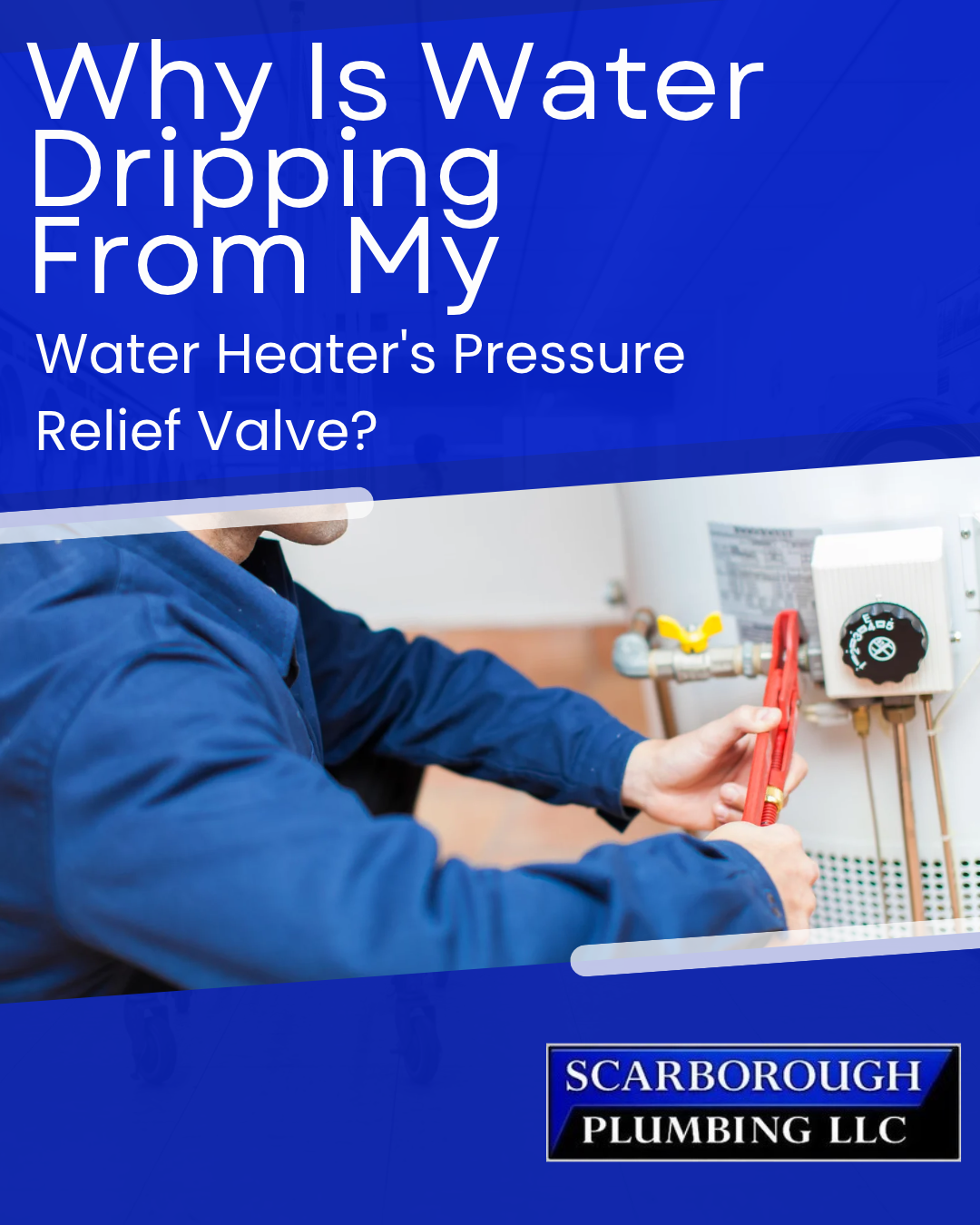
Why Is Water Dripping From My Water Heater's Pressure Relief Valve?

November 23, 2026

Share this article

The Warning Signs Are Usually More Than Just Leaks

Where Can Plumber’s Putty Be Used Correctly?

A water heater pressure relief valve leaking can mean the valve is responding to excessive pressure or temperature, or that the valve or a nearby connection needs repair. Dripping during heating cycles can also point toward thermal expansion in a closed plumbing system. The symptom needs diagnosis, not an automatic valve replacement. A new valve will not correct a pressure or overheating problem elsewhere in the system.


The temperature-and-pressure relief valve, commonly called the T&P valve, is a safety component. Never cap, plug, block, or disable its discharge to stop a leak. At Scarborough Plumbing, we help Gainesville homeowners distinguish a repairable component problem from a condition that needs more urgent attention. If you see continuous discharge, steam, or signs of overheating, keep clear and request prompt professional help rather than approaching the outlet to investigate.

What Is the T&P Valve, and Where Does Its Pipe Go?

On a typical storage water heater, the relief valve connects near the top or upper side of the tank. A discharge pipe carries water away from the valve to its intended termination point. The arrangement varies by installation, so the pipe's end may not be immediately beside the heater. Identify only what you can see safely without touching the valve, pipe, or discharged water.


A. O. Smith's relief-valve technical bulletin explains that the device responds to both temperature and pressure conditions. Its purpose is protective, so preventing it from releasing water can create a serious hazard. Do not confuse its discharge pipe with an ordinary drain that should be sealed to stop moisture. The plumber needs to determine why water is appearing and whether the discharge arrangement remains appropriate.

Is the Water Coming From the Outlet, a Connection, or the Tank?

Water around a heater does not automatically mean the relief valve has failed. A drip from the discharge outlet differs from moisture at the valve's threaded connection or a leak farther up the plumbing. Water can travel along a surface before reaching the floor, making the puddle's location misleading. Note the visible source only if you can do so from a safe, dry position.


A. O. Smith's guidance on water around a heater identifies several possibilities, including condensation, fittings, valves, and tank leakage. That distinction matters because the appropriate response changes with the confirmed source. Our guide to water heater warning signs covers the broader symptoms that may accompany the leak. This article focuses on the relief-valve area so you can explain what you noticed without trying to diagnose it yourself.

What you observe What needs to be distinguished Appropriate response
Drips from the discharge outlet during heating Pressure-related discharge, expansion, or valve condition Arrange diagnosis and report the timing
Moisture around a threaded connection A connection leak versus water tracking from elsewhere Have the source confirmed before repair
Water collecting beneath the heater Valve, fitting, condensation, or tank leakage Do not assume the puddle identifies the failed part
Continuous flow, steam, or unusually hot water A potentially urgent safety or control problem Keep clear and seek prompt professional assistance
A dry outlet now but recurring wet areas Intermittent discharge or another source Record the pattern without recreating it

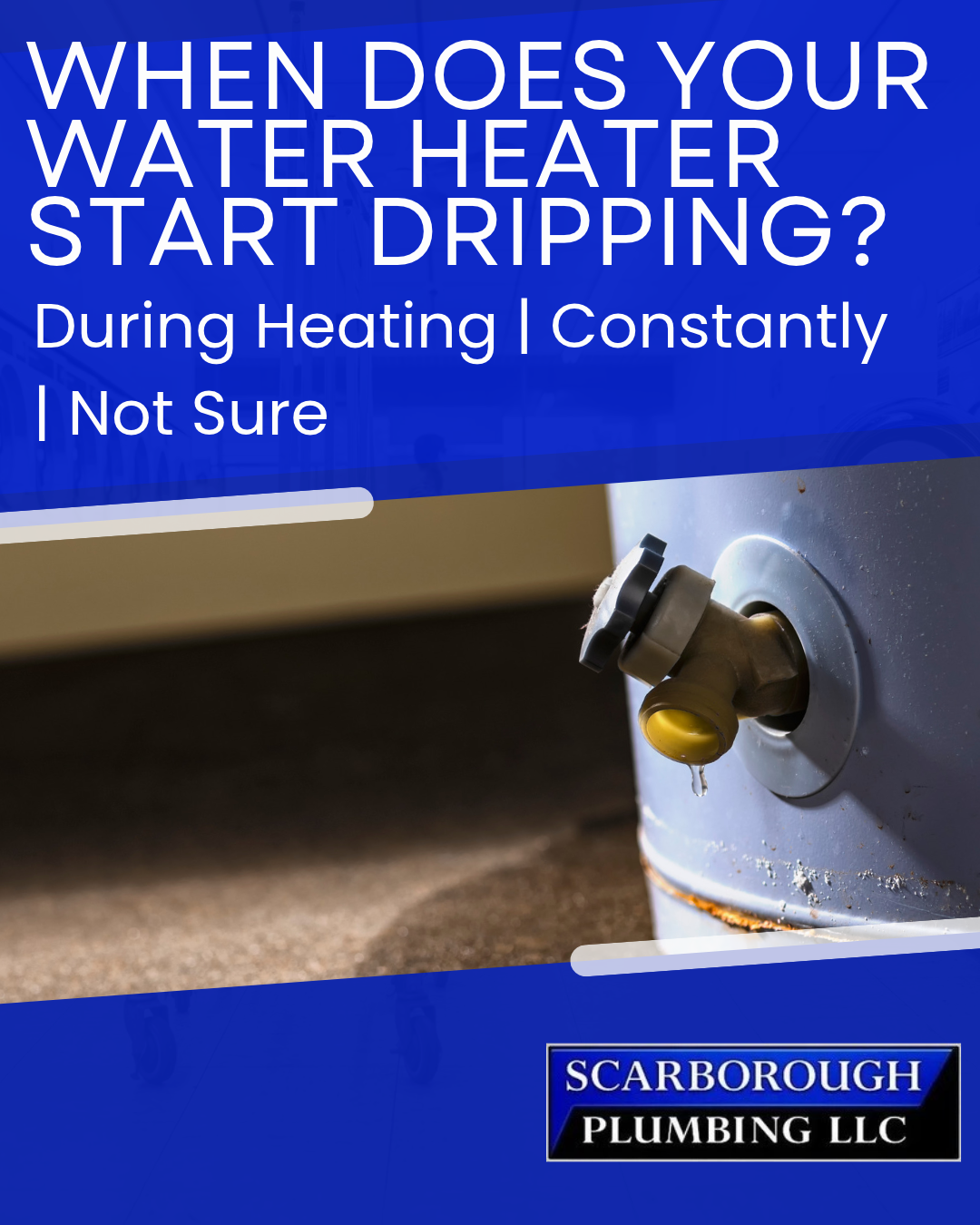
Why Can the Valve Drip While the Water Is Heating?

Water expands as it heats, and the plumbing system must accommodate that change. In a closed system, expanded water cannot simply move back into the supply in the same way it might in a system without that restriction. Pressure can rise as the heater operates. A drip associated with heating cycles therefore gives the plumber a reason to examine expansion control and system pressure.


Bradford White's guidance on discharging relief valves discusses this relationship between closed systems and heating-related pressure increases. An expansion tank or other applicable control may need assessment rather than assuming the relief valve is the only problem. The presence of an expansion tank does not prove that it is sized, configured, or functioning correctly. Tell us when the dripping occurs, but do not deliberately run the heater through more cycles to demonstrate it.

Could High Pressure, Overheating, or a Worn Valve Be Responsible?

Several conditions can produce moisture around a relief-valve installation, which is why replacing a visible part without testing can miss the cause. Incoming pressure, pressure changes during heating, and temperature-control operation all deserve consideration when the symptoms point that way. The valve itself may also have a condition that prevents it from closing properly. Deposits or valve-seat problems are possibilities to investigate rather than conclusions to draw from the drip alone.


Do not treat the valve's safety rating as a target for normal operation or attempt to install a different-rated valve to suppress discharge. Correct component selection must follow the heater's requirements and applicable installation rules. Our water heater and residential plumbing services focus on finding the actual source before choosing the repair. We explain whether the findings concern the valve, its connection, expansion control, another system component, or the heater itself.

Which Symptoms Need Prompt or Emergency Attention?

A recurring drip deserves a service call even when the heater still produces hot water. Continuous discharge, steam, unusually hot water at fixtures, or signs of overheating require faster attention. Keep away from the outlet because escaping water may be hot enough to cause serious burns. Do not lift the lever, remove the valve, or stand over the discharge to inspect it.


If the heater appears dangerously overheated, keep people away and obtain immediate professional guidance about the safe next step. Do not approach a wet electrical area or reach across hot discharge to operate controls. If there is violent discharge or another immediate threat to personal safety, leave the area and call emergency services. Avoid turning the heater back on after a safety-related shutdown until the cause has been evaluated and corrected.

What Can You Safely Observe Before Calling?

You can help the diagnosis without testing the valve or adjusting the system. Note whether the water appears at the end of the discharge pipe or elsewhere, and whether it is intermittent or continuous. Record when you first noticed it and any recent plumbing or heater work. Take a photo only from a safe position that does not require touching equipment or entering water.


Homeowners in Newberry, Alachua, High Springs, and Archer can also share the heater's approximate age and model if that information is already available. A previous service invoice or installation record may be useful without requiring you to reach behind the unit. Tell us if other fixtures have shown unusual pressure behavior or changes in hot-water temperature. These observations help guide testing but cannot confirm that the heater is safe to continue operating.


Useful details to share with us

  • Whether the outlet drips, flows continuously, or has produced steam.
  • Whether water appears during known heating cycles or at unrelated times.
  • Any unusually hot water or recent change in temperature behavior.
  • The approximate heater age and any relevant repair history.
  • Recent changes to pressure regulation, backflow devices, or plumbing.
  • Whether the area is wet near electrical components or other equipment.


Keep the discharge path unobstructed while help is arranged. Do not attach a cap, close off the outlet, or redirect it into an arrangement that could block discharge. Ask for professional guidance instead of improvising a temporary plumbing modification.

What Will a Licensed Plumber Check?

The inspection should establish the leak source and examine the conditions that may be causing it. That can include water pressure, temperature-control operation, expansion provisions, valve suitability, and nearby fittings. The heater's overall condition also matters when deciding whether a focused repair is sensible. The findings should explain why the recommended work addresses more than the visible water.


Pressure behavior may need to be evaluated across operating conditions rather than inferred from a single observation. Similarly, a dripping outlet does not establish whether the valve is opening correctly or failing to reseat. We discuss the tests and repair scope that fit the symptoms instead of asking you to select a replacement part in advance. Where more than one issue is found, the proposal should identify each one clearly.

Should the Valve Be Repaired, Replaced, or Should the Heater Go?

A leaking relief-valve area does not automatically mean the entire water heater needs replacement. A sound heater may have a repairable connection, faulty valve, or expansion-control issue that can be addressed appropriately. Confirmed tank leakage is a different finding and generally calls for replacement of the heater. Age, remaining condition, warranty considerations, and the extent of additional work can also affect the decision.


The decision framework below begins with diagnosis because similar-looking moisture can lead to different recommendations. Ask what was measured or observed, what remains uncertain, and what the proposed repair will correct. A repeated drip after a previous valve replacement is a reason to revisit the system conditions. It is not a reason to cap the outlet or simply keep replacing the same component without an explanation.

Decision Findings that may support it What the work must address
Repair a connection The leak is confirmed at a serviceable fitting or connection The actual leaking joint and the condition of adjoining components
Replace the relief valve Diagnosis identifies a faulty or unsuitable valve Correct replacement selection plus any contributing system problem
Correct expansion or pressure control Testing identifies excessive pressure or inadequate expansion accommodation The system condition causing discharge, not just the outlet drip
Repair temperature controls Diagnosis identifies a control fault in an otherwise serviceable heater Safe operation and verification after correction
Replace the heater The tank is confirmed leaking or broader deterioration makes repair unsuitable A complete replacement scope with required installation provisions
Seek urgent assistance Continuous discharge, steam, or suspected overheating occurs Immediate safety and diagnosis before normal use resumes

What Does a Service Call or Repair Cost?

Our minimum service call is $180, including up to one hour of labor and the materials needed for the repair under our service terms. If work continues beyond that first hour, our labor rate is $45 per additional 15 minutes. The actual repair scope still depends on what we find, including whether a valve, pressure-control component, expansion provision, or the water heater needs replacement. Ask us to explain any additional equipment, parts, or project work before you approve it.


A diagnosis and focused repair should not be compared with a complete heater replacement as though they are the same service. The estimate should distinguish inspection and labor from any separately scoped components, installation changes, and replacement work. Access, heater type, existing condition, and the number of issues found can affect the total. We explain the proposed work so you can evaluate the recommendation and understand what is included.

Service item Our published rate or pricing basis What to confirm
Minimum service call $180 Includes up to one hour of labor and needed repair materials under our service terms
Labor after the first hour $45 per additional 15 minutes The expected time for authorized additional work
Component or system work beyond the basic repair Based on the diagnosed scope Any additional equipment, parts, or installation changes
Water heater replacement, if warranted Project-specific estimate Heater selection, installation requirements, included work, and exclusions

What Should Happen After the Repair?

Before normal use resumes, the work should be checked against the condition that caused the original symptom. That means more than seeing a dry floor immediately after a component is installed. Ask which problem was confirmed and how the completed work was verified. Keep the service record so a future visit can build on the findings rather than begin without history.


Continue observing from a safe distance and report recurring discharge, unusual temperature changes, or new moisture. Do not alter the relief arrangement if the same symptom returns. A different source or an unresolved system issue may require further attention. Your follow-up description should include when the water appeared and whether it resembles the original problem.

Frequently Asked Questions

  • Is a little dripping from the relief pipe normal?

    Do not assume recurring dripping is harmless or a routine feature of heater operation. It can indicate pressure-related discharge or a valve condition that needs diagnosis. Scarborough Plumbing can check the source and relevant system conditions before recommending a repair.

  • Why does the pipe drip only when the heater is running?

    Thermal expansion is one possible explanation, particularly in a closed plumbing system. The timing does not prove that the valve itself is defective. A plumber should assess pressure behavior and expansion control alongside the valve.

  • Can I plug the discharge pipe until the plumber arrives?

    No. Never cap, plug, block, or disable the relief-valve discharge. It is part of the heater's safety arrangement, so keep clear of hot water and request professional help rather than trying to stop the release mechanically.

  • Does replacing the valve always stop the leak?

    No. A new valve will not correct excessive system pressure, inadequate expansion control, or an overheating fault. We assess contributing conditions so the proposed repair addresses the cause instead of only the visible component.

  • Does a leaking relief valve mean I need a new water heater?

    Not automatically. A valve, connection, or system-control issue may be repairable when the heater remains serviceable. Confirmed tank leakage or significant overall deterioration calls for a different replacement discussion.

  • How can I arrange service with Scarborough Plumbing?

    Call (352) 472-7385 or contact us and describe the dripping or discharge you noticed. We serve Gainesville, Newberry, Alachua, High Springs, and Archer. If there is steam, continuous hot discharge, or suspected overheating, explain that immediately and keep away from the equipment.

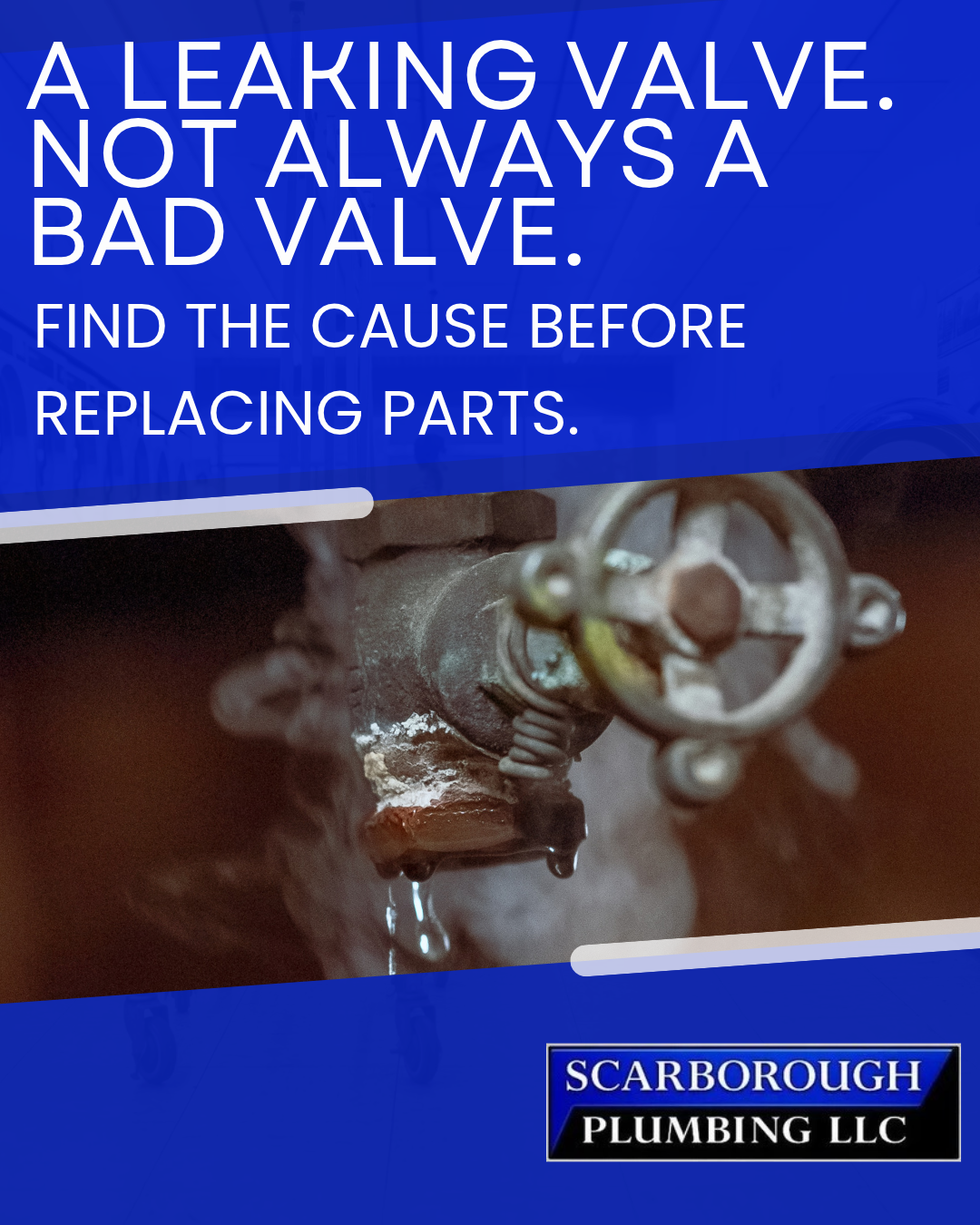
Get the Cause Checked Before Replacing Parts

If your water heater's relief pipe is dripping, we can help identify whether the source is a valve, connection, pressure condition, or another heater problem. Our licensed plumbers assess the relevant components before explaining the repair options. Tell us when the discharge occurs and whether hot-water performance or temperature has changed. Those details help us understand the concern without asking you to perform a risky test.


Scarborough Plumbing provides water heater diagnosis and repair services in Gainesville and surrounding communities. We explain the findings, proposed scope, and pricing before additional work is authorized. Keep the discharge unobstructed and stay clear of any hot release while you arrange assistance. Contact Scarborough Plumbing to discuss the symptoms and schedule appropriate service.


Helpful Services and Related Reading

Recent Posts

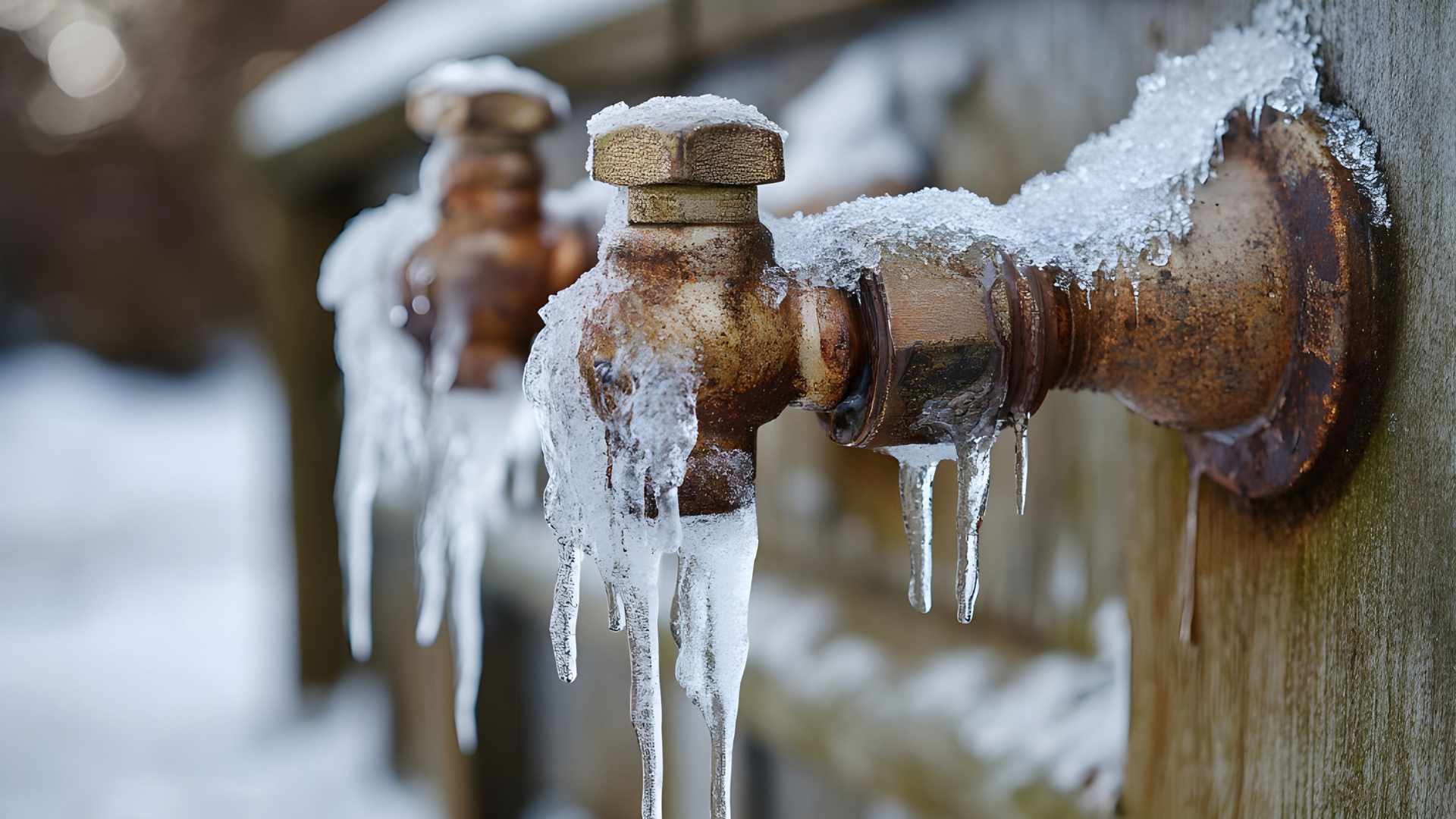
Rusty outdoor water taps with icicles and snow in winter
November 16, 2026
Protect outdoor faucets and exposed pipes before a Gainesville cold snap. Learn safe preparation steps, freeze-damage clues, and when to call us.
Hand turning toilet flush handle in a white bathroom.
November 9, 2026
Learn why your toilet tank refills slowly, what you can safely check, and when Gainesville homeowners can call us for fill valve or water supply repairs.
Person using a plunger to unclog a sink filled with murky water
November 2, 2026
Avoid Thanksgiving plumbing problems with practical tips for grease, disposals, slow drains, and backups. Prepare before guests arrive in Gainesville, FL.
Close-up of a damaged copper pipe joint leaking onto dirt and gravel
October 26, 2026
Learn why your water bill increased, how Gainesville rate changes differ from excess usage, and when a meter test or hidden leak needs professional help.
Hands holding a chrome faucet spout over a sink, with tools nearby.
October 19, 2026
Compare faucet repair and replacement, learn which worn parts can be fixed, understand costs, and choose the right solution for your Gainesville home.
Open paint can with white paint and brush on a splattered drop cloth
October 12, 2026
Learn when plumber’s putty can seal a fixture, why it cannot repair pressurized pipes, and what Gainesville homeowners should do during a leak at home.
Open trench with exposed pipe and muddy dirt at a construction site
October 5, 2026
Learn seven signs of tree roots in a sewer line, what wet-weather symptoms mean, and when Gainesville homes need cleaning, inspection, or repair next.
Person using a hand blender to mix food in a black pot on a kitchen counter
September 28, 2026
Learn why a garbage disposal hums but will not spin, safe checks to try, and when Gainesville homeowners should choose professional repair or replacement.
Worker in a yellow hard hat leaning into a circular manhole at a construction site
September 21, 2026
Compare drain cleaning vs sewer line repair for Gainesville homes. Learn backup signs, camera inspection roles, wet-season costs, and the right next step.
Worker in orange vest standing in a narrow trench with pipes, next to a pink plywood wall and doorway.
September 14, 2026
Use this hurricane plumbing checklist to prepare your Gainesville home before a storm, from shutoff valves and drains to water heaters and septic systems.
Show More

Experience Expert Plumbing Services You Can Trust

When you need reliable plumbing solutions in Gainesville, Scarborough Plumbing is here to help. Our experienced team is ready to tackle any plumbing challenge, from routine maintenance to complex installations and everything in between. We pride ourselves on delivering honest, professional service with transparent pricing and quality workmanship that lasts. Don't let plumbing issues disrupt your day. Contact Scarborough Plumbing now and discover why Gainesville residents and businesses have trusted us since 2010 for all their plumbing needs.