Filled-in black heart shape.

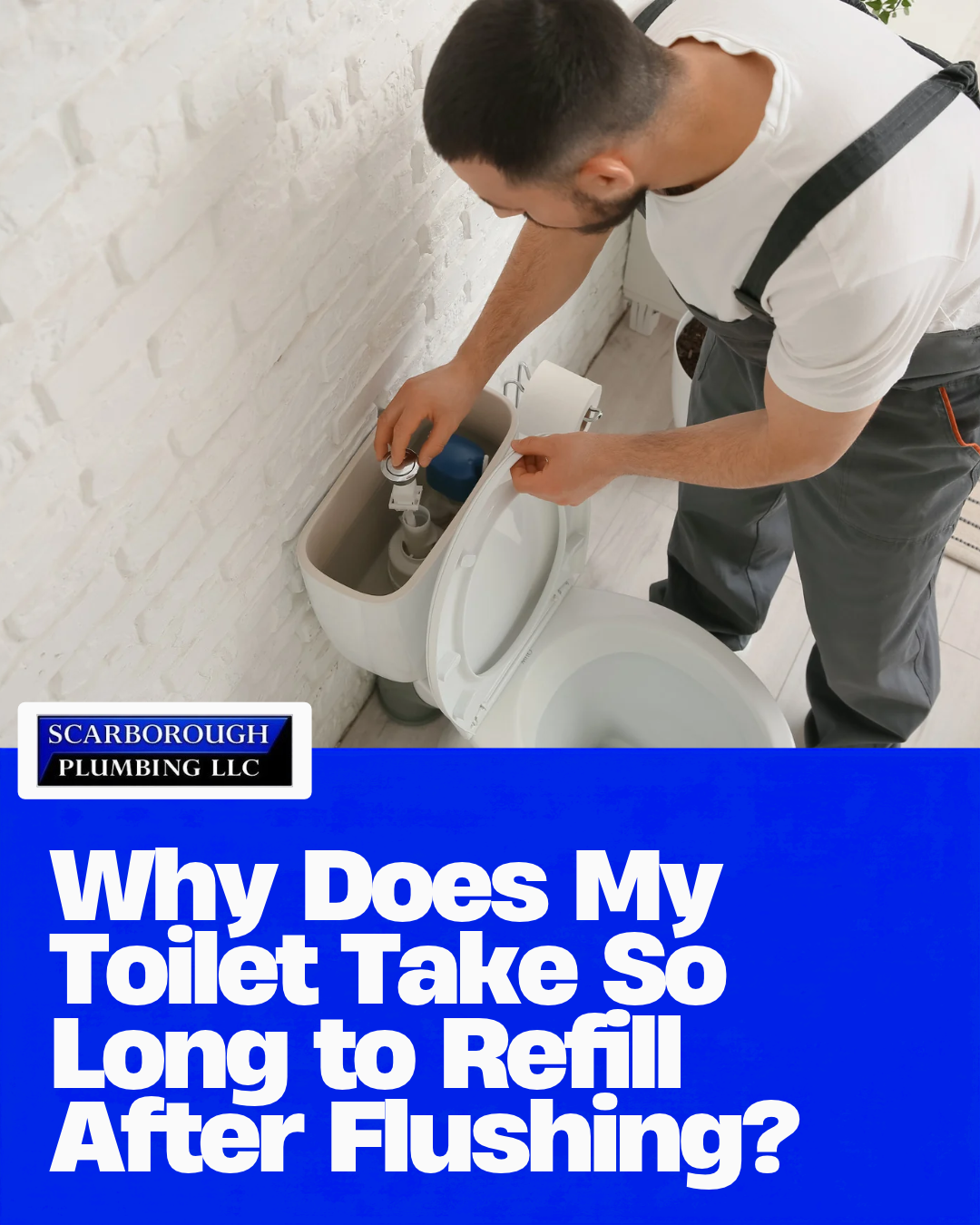
Why Does My Toilet Take So Long to Refill After Flushing?

November 9, 2026

Share this article

The Warning Signs Are Usually More Than Just Leaks

Where Can Plumber’s Putty Be Used Correctly?

If your toilet takes long to refill after flushing, water may be entering through a restricted supply valve, a blocked or worn fill valve, or a supply connection that is limiting flow. Sometimes the problem extends beyond the toilet to the home's water supply. Water escaping from the tank into the bowl can also make the refill seem unusually long. The right repair starts with identifying which part of the cycle is actually slowing down.


At Scarborough Plumbing, we help Gainesville homeowners investigate toilet and fixture problems before recommending replacement. A sound toilet with a faulty valve may need a focused repair rather than a new fixture. This guide explains what you can observe safely, what those observations mean, and when to have us check the toilet's supply and tank components.

First, Separate Slow Refilling From Slow Flushing

Refilling is the water entering the tank after a flush. Flushing is the release of stored water into the bowl and through the drain. A tank that rises slowly points toward a different investigation from a bowl that empties slowly or threatens to overflow. You can have both problems at once, but treating one does not automatically correct the other.


A toilet that keeps running presents another distinction: it may reach its normal level but fail to stop, or lose water and repeatedly refill. Our guide to common plumbing problems homeowners should never ignore explains why persistent toilet symptoms deserve attention. For this problem, start by watching whether the tank level rises steadily and whether the incoming water eventually stops. If the bowl rises unusually high instead of clearing, stop flushing and arrange a separate drainage assessment.

How Long Should a Toilet Take to Refill?

There is no single refill time that accurately diagnoses every toilet. Tank design, required refill volume, valve settings, and available supply flow all affect the cycle. A clear change from your toilet's normal behavior is more useful than an isolated stopwatch number. A fixture that used to be ready promptly and now leaves you waiting deserves a closer look, even if it eventually shuts off.


Observe one ordinary flush when other major water uses are off, and note the time until filling stops. Repeat later under similar conditions rather than flushing continuously to test it. Record whether the level reaches the manufacturer's marked waterline and whether the toilet sounds different from before. Do not raise the level above the specified setting just to improve the next flush or compensate for slow filling.

Common Causes of a Slowly Filling Tank

A slow refill often involves a bottleneck between the toilet's supply connection and its tank. The visible symptom alone cannot tell you which component is responsible. Several causes can coexist, particularly when an older shutoff valve and tank mechanism have both deteriorated.

Possible cause What you might notice What needs checking
Partly closed supply valve Slow refill after someone worked on the toilet Valve type, position, and condition
Debris in the fill valve Reduced or irregular flow into the tank Model-specific inlet and valve components
Worn fill valve Persistent weak filling or unusual noise Valve function and compatible replacement
Restricted supply connector Toilet fills slowly while nearby fixtures seem normal Connector condition and actual delivery
Broader supply problem Several cold-water fixtures are weak Pressure and flow beyond the toilet
Tank-to-bowl leakage Refill takes longer or restarts without a flush Flush seal, seating, and tank level

Debris and Mineral Deposits

Particles can restrict small water passages inside a fill valve. Mineral deposits are another possible contributor, but white marks on the toilet do not prove that scale is the cause of slow filling. Fluidmaster's toilet troubleshooting guide identifies debris and restrictions in the valve, shutoff, or supply line as issues to investigate when filling is weak. Cleaning procedures depend on the installed valve, so identify the model before attempting any internal maintenance.


Wear and Restricted Supply Flow

An aging mechanism may not open reliably even when water reaches the toilet normally. A connector or shutoff can also restrict delivery, making a new fill valve an incomplete solution. We check the supply side alongside the tank rather than assume the most visible part is the only problem. That approach helps avoid replacing components that are still working correctly.

Safe Checks Before You Replace Any Parts

Start with observation rather than disassembly. These checks apply to an accessible, conventional gravity-tank toilet; concealed tanks, pressure-assisted toilets, and unfamiliar mechanisms need their own instructions. Leave a heavy, attached, or difficult tank lid in place if you cannot remove and support it safely.


  • Check for outside leaks first. Look around the supply valve, connector, tank, and floor without loosening anything. Water outside the fixture changes the urgency.
  • Observe one refill. If the lid lifts off normally, set it securely on a protected surface where it cannot fall. Watch the water level without moving the mechanism.
  • Look for obvious interference. A chain or another component holding the flush seal open may let water escape while the tank fills. Do not force parts into a new position.
  • Inspect the connector visually. Note sharp bends, corrosion, bulging, or wet connections. Do not twist an attached hose to straighten it.
  • Compare nearby cold-water flow. Check a sink separately, then note whether other fixtures are also weaker than usual. This provides a clue rather than a pressure measurement.
  • Record recent changes. Mention plumbing work, a recent water shutdown, or a problem that began suddenly. Timing can help guide diagnosis.


Checking the Toilet's Supply Valve

The shutoff is usually near the wall or floor behind the toilet, with a connector leading to the tank. Different designs operate differently: a quarter-turn lever and a multi-turn handle do not use the same movement. If you recognize the valve, it is dry and sound, and its instructions are clear, you can check whether it has been left partly closed. Do not force a stiff valve, use pliers to overcome resistance, or keep turning a handle that starts leaking.


A visible handle position does not establish that the valve is internally healthy. An older valve can have deteriorated parts even when it appears open. If you are unsure of its type or condition, leave it alone and tell us what you observed. A slow refill is usually less disruptive than damaging the only reliable shutoff for that fixture.

When the Fill Valve Deserves Attention

The fill valve controls water entering the tank and stops that flow at the intended level. A toilet hissing while refilling may simply be making normal filling noise, but a new, persistent, or unusually loud sound deserves investigation alongside the refill behavior. Sound alone cannot distinguish a restriction from a failing component. The important questions are whether water enters normally, whether the level reaches its setting, and whether filling stops.


Kohler's toilet troubleshooting guidance includes supply-valve position, proper flush-seal seating, and the fill-valve inlet among checks for excessive filling time. Those checks show why a slow toilet fill valve should not be diagnosed by noise alone. We can determine whether model-appropriate cleaning, a compatible service part, or fill valve replacement is the practical choice. Avoid taking apart a pressurized valve or pouring drain cleaner into the tank to try to restore flow.

Could the Problem Be Low Water Pressure?

One slow toilet does not prove the whole house has low pressure. Water pressure and water flow are related, but they are not interchangeable measurements. A local restriction can reduce the amount of water reaching the tank even when the wider supply is satisfactory.

Observation What it suggests Sensible next step
One toilet is slow; other fixtures seem normal Local valve, connector, or tank issue is more likely Inspect the toilet supply and fill mechanism
Nearby cold-water fixtures are also weak A shared supply restriction is possible Check the affected branch and compare other areas
Several fixtures changed suddenly A broader supply issue needs consideration Check provider notices and request diagnosis
Filling slows mainly during other water use Available flow under demand may be limited Compare performance with other fixtures off
Slow filling accompanies unexplained water use or dampness Leakage may need investigation Arrange a plumbing assessment promptly

Our article on finding the cause of low water pressure explains the broader troubleshooting approach. Tell us which fixtures changed and whether the issue began suddenly or gradually. Do not adjust a pressure regulator based solely on the refill speed of one toilet.


For homeowners in Newberry, Alachua, High Springs, and Archer, the same distinction applies regardless of the water provider or neighborhood. We evaluate the particular fixture and supply conditions rather than infer a cause from the location. If several fixtures lost flow at once, checking for a provider notice can be useful while arranging help.

Check Whether Water Is Escaping While the Tank Fills

A tank can appear slow because some incoming water is escaping into the bowl before the refill finishes. Once the tank reaches its intended level, watch for later refilling without anyone using the toilet. That pattern can suggest tank water loss rather than a simple restriction. Our guide to unexplained water bills and hidden leaks helps explain when extra consumption needs investigation beyond the sound of one fixture.


For suitable gravity-tank toilets, the EPA's home-maintenance guidance recommends adding a few drops of food coloring to the tank, waiting 10 minutes without flushing, and checking for color in the bowl. Flush afterward to reduce the risk of staining, and follow any model-specific restrictions. Color reaching the bowl shows a leakage path but does not identify the exact failed part. Slow filling alone does not necessarily waste extra water; ongoing leakage or repeated refilling is the more direct water-waste concern.

Choosing Repair, Replacement, or a Supply Diagnosis

Repair the confirmed problem before considering a whole new toilet. If the porcelain is sound and the issue is a serviceable fill valve, supply connector, or shutoff, targeted work may restore normal operation. A toilet replacement needs a separate justification, such as structural damage, unsuitable performance, or a broader combination of condition and repair needs.


A Practical Decision Framework

  • Monitor briefly: Filling remains consistent with the model's usual behavior, reaches the proper level, and stops reliably without leaks.
  • Schedule toilet repair: One fixture has become persistently slow, the supply appears otherwise normal, or the fill mechanism is unreliable.
  • Request broader supply diagnosis: Several fixtures are weak, refill speed changes significantly with household demand, or the problem followed a wider supply change.
  • Discuss replacement: Inspection identifies damaged porcelain, unavailable compatible components, or recurring issues that make another repair poor value.
  • Seek prompt help: Water leaks outside the fixture, the tank will not stop filling, or a supply valve is leaking or cannot be operated safely.


What Our Service Pricing Includes

Our minimum service call is $180, covering up to one hour of labor, plus materials needed for the repair. Work beyond the first hour is billed at $45 per additional 15-minute increment. We explain the recommended work and pricing before proceeding, including any scope that changes after inspection.

Cost item Our published service terms What to clarify before work
Minimum service call $180 for up to one hour of labor, plus materials Required parts and the diagnosed scope
Additional labor $45 per 15-minute increment after the first hour Anticipated extra work
Fill valve work Priced according to the actual repair Model compatibility and cleaning versus replacement
Supply valve or connector work Depends on condition and access Whether reliable isolation is available
Toilet replacement Requires a project-specific scope Fixture, connections, installation, and related repairs

Our toilet repair and replacement guide explains how the wider decision is made. Ask whether the proposed work corrects a restriction, stops leakage, replaces a worn mechanism, or addresses several issues together. A clear description is more useful than a parts price that leaves diagnosis and labor out.


The visit should also verify that the repair worked through a complete refill cycle. That includes checking the water level, shutoff behavior, and accessible connections for leakage. If the toilet is still slow after the identified restriction is corrected, further diagnosis should follow the remaining evidence rather than another automatic parts swap.

Frequently Asked Questions

  • Why is my toilet filling slowly when the sink works normally?

    A local restriction or fill-valve problem becomes more likely when other fixtures seem normal. The toilet's shutoff and connector still need checking alongside the tank mechanism. Normal sink flow does not prove every part of the toilet supply is clear.

  • Can a partly closed shutoff valve cause a slow refill?

    Yes, restricted opening can limit the water entering the toilet. Check only if you recognize the valve and it operates safely. Do not force an old or leaking shutoff to test this possibility.

  • Does hissing mean the fill valve needs replacement?

    Not by itself. Some noise is normal during refilling, while a change in sound can accompany several conditions. Persistent hissing after the expected shutoff point is a reason to investigate rather than assume normal operation.

  • Should I flush again while the tank is still filling?

    Let the refill finish before judging the next flush. A partly refilled tank may not provide the intended flush volume. Repeated flushing can confuse the observation and is especially unhelpful when the bowl is not clearing normally.

  • Will hard water always cause this problem?

    No, mineral buildup is one possible contributor among several. Debris, component wear, valve position, and supply conditions also matter. A visible deposit does not confirm what is restricting flow inside a valve.

  • Can replacing the flapper fix slow filling?

    It can help if a leaking or poorly seated flush seal is letting water escape during refill. It will not clear a restricted supply valve or repair a failing fill valve. The water-level behavior and an appropriate leak check help distinguish those situations.

Get Help With a Toilet That Refills Too Slowly

If your toilet tank fills slowly after flushing, we can check the supply and tank mechanism before recommending the repair. Our plumbing services support homeowners in Gainesville, Newberry, Alachua, High Springs, and Archer. Tell us whether only one toilet is affected and whether the filling eventually stops. Those details help us focus on the cause instead of guessing at replacement parts.


Contact Scarborough Plumbing or call 352-472-7385 to discuss the problem and schedule service. Mention any outside leakage, recent plumbing work, or shutoff valve that is difficult to operate. We will explain the findings and proposed scope so you can decide how to proceed. The goal is a toilet that refills reliably and stops at the correct level.


Helpful Services and Related Reading

Recent Posts

Person using a plunger to unclog a sink filled with murky water
November 2, 2026
Avoid Thanksgiving plumbing problems with practical tips for grease, disposals, slow drains, and backups. Prepare before guests arrive in Gainesville, FL.
Close-up of a damaged copper pipe joint leaking onto dirt and gravel
October 26, 2026
Learn why your water bill increased, how Gainesville rate changes differ from excess usage, and when a meter test or hidden leak needs professional help.
Hands holding a chrome faucet spout over a sink, with tools nearby.
October 19, 2026
Compare faucet repair and replacement, learn which worn parts can be fixed, understand costs, and choose the right solution for your Gainesville home.
Open paint can with white paint and brush on a splattered drop cloth
October 12, 2026
Learn when plumber’s putty can seal a fixture, why it cannot repair pressurized pipes, and what Gainesville homeowners should do during a leak at home.
Open trench with exposed pipe and muddy dirt at a construction site
October 5, 2026
Learn seven signs of tree roots in a sewer line, what wet-weather symptoms mean, and when Gainesville homes need cleaning, inspection, or repair next.
Person using a hand blender to mix food in a black pot on a kitchen counter
September 28, 2026
Learn why a garbage disposal hums but will not spin, safe checks to try, and when Gainesville homeowners should choose professional repair or replacement.
Worker in a yellow hard hat leaning into a circular manhole at a construction site
September 21, 2026
Compare drain cleaning vs sewer line repair for Gainesville homes. Learn backup signs, camera inspection roles, wet-season costs, and the right next step.
Worker in orange vest standing in a narrow trench with pipes, next to a pink plywood wall and doorway.
September 14, 2026
Use this hurricane plumbing checklist to prepare your Gainesville home before a storm, from shutoff valves and drains to water heaters and septic systems.
Hand reaching for a toilet flush handle beside a white toilet seat
September 7, 2026
Learn why toilets gurgle after heavy rain in Gainesville, what sewer or septic problems cause it, what to check, and when professional help is needed.
A person using a plunger to clear a clogged kitchen sink filled with murky brown water.
August 31, 2026
Compare professional drain cleaning vs DIY cleaners in Gainesville FL, including safety risks, hydro jetting, September checks, costs, and when to call.
Show More

Experience Expert Plumbing Services You Can Trust

When you need reliable plumbing solutions in Gainesville, Scarborough Plumbing is here to help. Our experienced team is ready to tackle any plumbing challenge, from routine maintenance to complex installations and everything in between. We pride ourselves on delivering honest, professional service with transparent pricing and quality workmanship that lasts. Don't let plumbing issues disrupt your day. Contact Scarborough Plumbing now and discover why Gainesville residents and businesses have trusted us since 2010 for all their plumbing needs.