
How to Protect Outdoor Faucets and Pipes Before a Cold Snap
The Warning Signs Are Usually More Than Just Leaks
Where Can Plumber’s Putty Be Used Correctly?

Disconnect outdoor hoses, protect exposed plumbing, and know how to shut off your home's water before freezing weather arrives. Outdoor faucets and pipes in unheated or exposed locations deserve attention first. The right preparation depends on the plumbing arrangement, equipment instructions, and forecast conditions at your property. Insulation and covers reduce exposure, but no single product guarantees that every pipe will remain protected during a prolonged freeze.
If you are researching
how to prevent pipes from freezing in Gainesville, start before the warning becomes an overnight emergency. We help homeowners identify vulnerable or damaged plumbing and decide whether a fixture repair or a more lasting correction makes sense. Newberry, Alachua, High Springs, and Archer homeowners also need to consider their own property's exposure and water-system setup. Here is a practical way to prepare without creating new problems in the process.
Can Pipes Really Freeze in North Central Florida?
Yes, occasional freezing weather can affect North Central Florida plumbing, particularly where water lines lack protection. The University of Florida's winter-weather guidance reports that the Gainesville area averages around 16 days a year with lows at or below freezing. That is useful regional context rather than a forecast for any particular home. Your exposure depends on where the pipes run and the conditions during the event.
A brief overnight temperature reading also does not tell the whole story. Duration, protection, heated space, and the condition of the installation influence vulnerability. Avoid assuming that a Florida address makes preparation unnecessary or that one specific temperature guarantees a pipe will freeze.
Prepare around the actual plumbing and forecast, rather than a single number taken out of context.

Which Faucets and Pipes Should You Check First?
Walk around the property while conditions are safe and identify plumbing exposed to outdoor air. Include connections behind the home, along a garage wall, or serving a detached structure. A faucet that looks protected from the front may have a vulnerable supply section nearby. Do not enter an unsafe crawl space or climb into an attic to complete the check yourself.
| Location or component | What to notice | Appropriate preparation question |
|---|---|---|
| Outdoor hose bib | Attached hoses, dripping, missing protection | Can the hose be removed and a suitable cover fitted? |
| Exposed supply piping | Bare sections, damaged insulation, exposed fittings | Which pipe-insulation product suits the installation? |
| Garage or other unheated space | Water lines near openings or exterior walls | How can exposure be reduced safely? |
| Under-sink piping on an exterior wall | Cold location or known history of freezing | Is safe warm-air circulation appropriate during the event? |
| Irrigation or backflow assembly | Exposed equipment and unfamiliar valves | What do the installer and local provider recommend? |
| Well or other water-system equipment | Exposed piping and equipment connections | What model-specific protection is required? |
Note any active leak or valve you cannot operate normally before adding a cover. A cover is not a repair for a leaking hose bib, damaged fitting, or split pipe. Our guide to faucet repair versus replacement explains why the condition of the fixture matters when selecting the scope. For freeze preparation, the goal is both reducing exposure and correcting existing defects that interfere with protection.
Prepare Outdoor Hose Bibs Before the Freeze Warning
Outdoor hoses should be disconnected, drained, and stored before freezing conditions arrive. The American Red Cross's frozen-pipe guidance includes hose removal as a prevention step. If a hose is stuck, avoid forcing the connection or twisting the faucet against its supply pipe. A stubborn connection or leaking fixture is worth addressing while there is time for a proper repair.
Your preparation checklist can include:
- Remove attached hoses: disconnect them before freezing weather rather than leave them full of water at the faucet.
- Check for visible leakage: report a faucet that will not close normally or leaks around its body or connection.
- Use a suitable faucet cover: choose one that fits the fixture and install it according to its directions.
- Review separate isolation arrangements: if an indoor valve serves that exterior branch, confirm the correct draining procedure for that installation.
- Do not improvise with unfamiliar valves: ask for guidance if you cannot identify what a valve controls.
Some installations allow an exterior branch to be isolated and drained, while others have a different arrangement. Do not apply one winterizing procedure to every faucet without understanding the plumbing. Orange County Utilities' Florida freeze-preparation guidance also recommends protecting outdoor valves and spigots. Use that as general preparation context while following the instructions relevant to your own fixture and local water provider.

How to Insulate Exposed Pipes Without Hiding a Problem
Start with sound plumbing rather than covering a leak and hoping insulation will resolve it. Pipe sleeves and other products need to suit the pipe size, location, and exposure. Follow product instructions around joints, fittings, and exterior conditions instead of assuming loosely wrapped material is equivalent to a properly fitted system. Repeated trouble at the same section deserves a closer evaluation of the installation.
Look for gaps and damaged protection
Existing insulation may be missing, displaced, or no longer suited to the location. Make a list of visible gaps without pulling apart unfamiliar assemblies. Photographs taken from a safe position can help us understand what needs attention. The inspection should distinguish a simple protection gap from a damaged pipe or connection underneath it.
Treat heating products as model-specific equipment
Pipe-heating cable is not interchangeable with ordinary cords, roof de-icing cable, or an improvised heat source. If a product is being considered, it must be appropriate for the pipe material and intended application and installed to its instructions. Do not wrap or overlap it contrary to its directions or connect it through an unsafe electrical arrangement. Ask a qualified professional when compatibility or power supply is uncertain.
Consider a lasting correction for recurring exposure
If the same pipe repeatedly freezes or leaks, more wrapping may not resolve the underlying problem. A plumber can evaluate whether repairs, protection changes, or an appropriate route correction are justified. That recommendation should account for the actual exposed section rather than assume the whole house needs repiping. Our residential plumbing services can help assess the plumbing side of that decision.
Irrigation, Backflow Devices, and Wells Need Their Own Plan
Water-system equipment should not be treated as an ordinary outdoor faucet with extra valves. Irrigation controls, backflow assemblies, wells, and connected equipment can have installation-specific protection and draining requirements. Turning an unfamiliar handle or covering an assembly incorrectly can create a different problem. Use the equipment manufacturer's or installer's directions and the recommendations of the provider responsible for your system.
UF/IFAS guidance on Florida winter-weather events highlights the importance of preparation even in a generally mild climate, including concerns affecting well-dependent properties. For a homeowner, the useful action is to identify who can advise on each system before temperatures fall. Do not introduce antifreeze into household water piping or improvise an irrigation winterizing procedure. If you are unsure whether the work belongs to a plumber, irrigation professional, or well contractor, describe the equipment when requesting help.
What to Do While Freezing Conditions Continue
Follow current instructions from your own local water provider rather than assume guidance for another Florida county applies unchanged. Where recommended, a small flow through the appropriate vulnerable line and safe warm-air access to under-sink plumbing may form part of the plan. Keep cabinet chemicals out of children's and pets' reach if opening doors. Do not leave an outdoor faucet running simply because you heard that every faucet should drip.
During the event:
- Maintain safe access: keep shutoff locations and normal routes reachable without approaching icy surfaces or electrical hazards.
- Follow the relevant dripping guidance: confirm which fixture and line are involved instead of opening faucets at random.
- Reduce avoidable exposure: keep a garage closed where plumbing is vulnerable, without compromising safe ventilation or appliance operation.
- Watch for changed flow: a sudden reduction at one or more fixtures deserves attention, especially with other freeze symptoms.
- Check for leaks from a safe location: look for unexpected water indoors or outdoors as temperatures change.
- Avoid experimental heating: do not use a torch, grill, or other flame to warm plumbing.
The Red Cross recommends safe indoor heating practices and warns against open-flame thawing methods. This article is a preparation guide, not a reason to attempt hands-on thawing of concealed or damaged lines. If you suspect a frozen pipe, contact a licensed plumber for guidance appropriate to its location and condition. A damaged line may not reveal its full leakage until water begins moving again.
Recognize Freeze Damage and Know When to Shut Off Water
Reduced flow during a cold snap can suggest freezing, but other supply problems can also affect flow. Leaking after the temperature rises, new wet areas, or water where it should not be deserves prompt investigation. The absence of an obvious split outside does not prove that every concealed section remained undamaged. Start with observations rather than assume which pipe failed.
| Symptom | What it may mean | Safer next step |
|---|---|---|
| One fixture suddenly has little flow | A localized restriction or possible frozen section | Report the timing and affected fixture to a plumber |
| Several fixtures lose flow | A broader supply or utility issue may be involved | Check provider notices and request appropriate help |
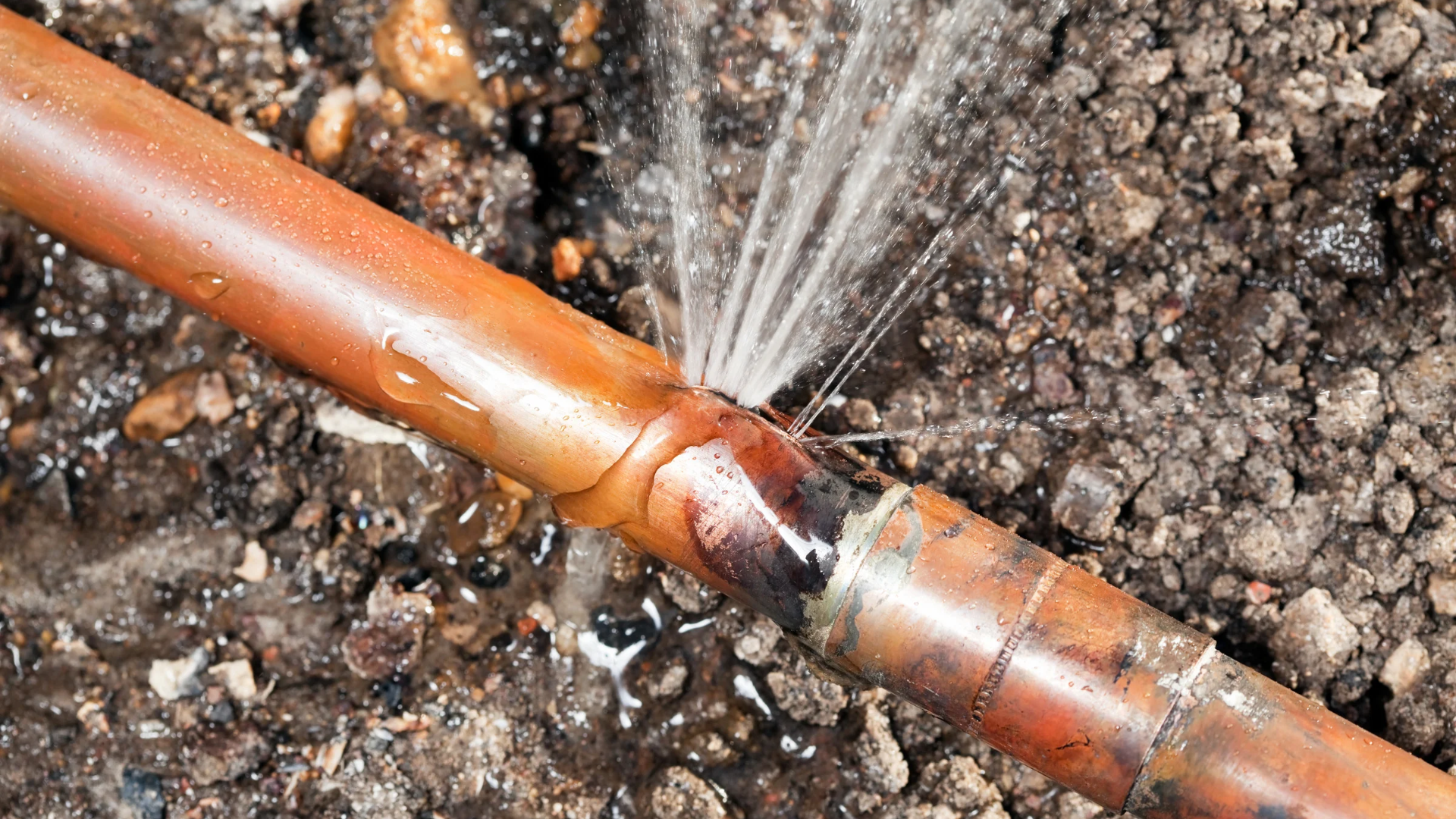
| Water sprays from a pipe or faucet body | Active plumbing damage | Shut off the appropriate homeowner valve if safely accessible and call for repair |
| Wet walls, ceilings, or unexplained indoor water | A concealed leak may be present | Keep clear of electrical hazards and arrange prompt assessment |
| Meter movement with expected water use stopped | Possible unexplained water use | Check for legitimate demand and arrange leak diagnosis |
| Water reaches electrical equipment | An immediate safety concern | Leave the affected area and seek qualified emergency help |
Know the location of your homeowner-operated main shutoff before an emergency, and ask for help if it is stiff, inaccessible, or unidentified. Do not force a valve or operate utility-owned equipment without the provider's direction. If a pipe is actively leaking, use the appropriate shutoff only when you can reach it safely. Do not cross standing water or touch wet electrical equipment to stop the flow.
Our guide to high water bills and hidden plumbing leaks explains how unexplained consumption can support further investigation. After a cold snap, a leak may be visible before the next bill arrives, so do not wait for billing evidence when damage is already apparent. Record when flow changed and where water appeared without opening walls or disturbing damaged materials. Those details can help direct the plumbing assessment.
When Repair Is Enough and What Our Service Pricing Includes
A damaged hose bib or isolated supply section does not automatically justify replacing the entire plumbing system. We evaluate the failed component, nearby conditions, and whether repeated exposure needs a more lasting correction. The estimate should explain the repair and any additional protection work separately. Interior drying or restoration may also be a distinct task when water has entered building materials.
Our minimum service call is
$180 for up to one hour of labor, plus materials. Additional labor after the first hour is billed at
$45 per 15-minute increment, as reflected in our published service pricing. We explain the recommended work and cost before proceeding. The final scope depends on access, parts, the damaged section, and any further findings.
| Cost item | Our service terms or scope approach | What to clarify |
|---|---|---|
| Minimum service call | $180 for up to one hour of labor | The diagnosis and work anticipated during the visit |
| Materials | Additional to the labor minimum | Required fixture, pipe, fitting, or valve parts |
| Additional labor | $45 per 15-minute increment after the first hour | Expected work beyond the initial hour |
| Outdoor faucet repair or replacement | Based on the actual condition | Whether the faucet alone or connected piping is affected |
| Concealed or exposed pipe repair | Based on location and extent | Access, repair boundaries, and associated protection |
| Repeated freeze vulnerability | Requires a defined corrective scope | Whether protection or routing changes are appropriate |
Ask whether the proposed work addresses only the current leak or also the condition that left the pipe vulnerable. A fixture repair and a route correction involve different tasks even when they begin with the same complaint. If inspection reveals a wider problem, we will explain the findings before expanding the recommendation.
The goal is a repair scope you understand, not a generic winterization package applied to every home.
Frequently Asked Questions
Is a faucet cover enough on its own?
A fitted cover can be part of the preparation, but it does not guarantee protection in every condition. The connected piping, installation, and duration of exposure also matter. Remove attached hoses and address known leaks rather than rely on the cover alone. Ask for an assessment if the same fixture has frozen or failed before.
Should every indoor faucet drip?
Do not assume that every fixture needs to run or that one drip protects the entire system. Follow your own provider's current guidance and identify the vulnerable line involved. A dripping recommendation is one preparation measure, not a substitute for correcting exposed or damaged plumbing. If the layout is unclear, ask for advice before the freeze.
Can plastic pipes freeze too?
Plastic piping should not be assumed immune to freezing. The Red Cross notes that freezing water can damage both metal and plastic piping. Fittings, valves, and connected equipment also need consideration. Choose preparation according to the installed system rather than the belief that one material eliminates every risk.
What if the faucet works normally after the cold snap?
Normal flow is reassuring, but check for new leaks or unusual dampness from safe locations. Inspect accessible exterior connections without removing components or opening concealed areas yourself. Report unexplained water movement, wet finishes, or a fixture that now leaks. A timely inspection can establish whether repair is needed instead of waiting for visible damage to spread.
Prepare Vulnerable Plumbing Before the Next Cold Snap
If you have an exposed pipe, leaking outdoor faucet, or shutoff you cannot operate reliably, we can help assess the plumbing before freezing weather arrives. We serve Gainesville homeowners and nearby communities including Newberry, Alachua, High Springs, and Archer. Tell us which components are exposed and whether the property has experienced previous freezing or leaks. That history helps us focus on the conditions that actually need attention.
Contact Scarborough Plumbing or call (352) 472-7385 to discuss vulnerable or damaged plumbing. Our residential plumbing services support fixture repairs, pipe concerns, and leak investigation. If water is actively escaping, tell us when you call and use the appropriate homeowner shutoff only if safe. We will explain the findings and practical repair options so you can decide how to protect your home.
Helpful Services and Related Reading
Recent Posts
Experience Expert Plumbing Services You Can Trust
When you need reliable plumbing solutions in Gainesville, Scarborough Plumbing is here to help. Our experienced team is ready to tackle any plumbing challenge, from routine maintenance to complex installations and everything in between. We pride ourselves on delivering honest, professional service with transparent pricing and quality workmanship that lasts. Don't let plumbing issues disrupt your day. Contact Scarborough Plumbing now and discover why Gainesville residents and businesses have trusted us since 2010 for all their plumbing needs.