
Faucet Repair vs Replacement: When Is It Better to Fix a Drip or Install a New Faucet?
The Warning Signs Are Usually More Than Just Leaks
Where Can Plumber’s Putty Be Used Correctly?
A dripping faucet may look minor, but the correct solution is not always obvious. Some leaks need only a washer, seal, or cartridge, while others reveal corrosion, unavailable parts, or widespread wear. Faucet repair vs replacement should depend on the leak source, fixture condition, and cost of a dependable result. Replacing every leaking faucet wastes usable fixtures, but repeatedly repairing a deteriorated one also wastes money.
At Scarborough Plumbing, we diagnose the failure instead of assuming replacement is necessary. Repair is often best when one serviceable component has worn out and the faucet body remains sound. Replacement becomes reasonable when leaks return, the fixture deteriorates, or correct parts are unavailable. This guide gives Gainesville homeowners a practical framework for choosing.
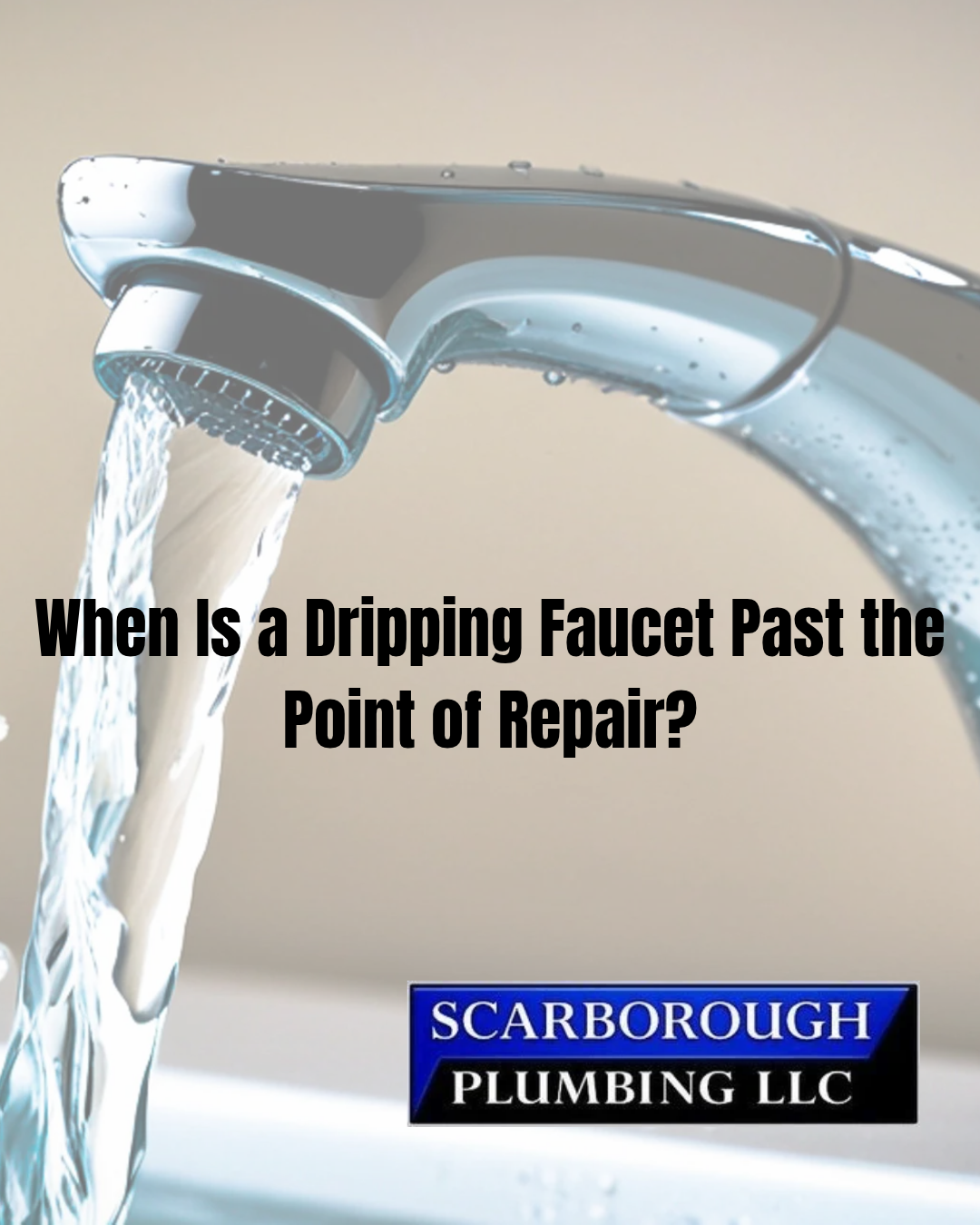
Why Faucets Drip and Why the Leak Location Matters
The phrase “leaking faucet” can describe several problems. Water dripping from the spout while the handle is off often points to a cartridge, valve, washer, or seat. Moisture around the handle or base may involve seals, mounting points, or another connection. Water beneath the sink may come from supply lines, shutoffs, hoses, or drain components rather than the spout.
Correct diagnosis matters because the wrong part will not stop the leak. Brand, model, age, valve type, and leak pattern help identify the repair. Mineral deposits can restrict movement or prevent proper sealing. Before buying parts or a fixture, determine where the water begins and when it leaks.
Faucet Repair vs Replacement at a Glance
A repair preserves the existing fixture by correcting the failed component. Replacement removes the faucet and installs a new unit, often with new supply connections or mounting hardware when appropriate. Neither option is automatically better because the fixture’s condition and compatibility determine the result. The table below shows the differences homeowners should compare.
| Decision factor | Faucet repair | Faucet replacement |
|---|---|---|
| Best fit | One identifiable serviceable part has failed | Several parts are worn, the body is damaged, or parts are unavailable |
| Upfront scope | Diagnosis, disassembly, part replacement, reassembly, and testing | Removal, fixture installation, connections, mounting, sealing, and testing |
| Typical disruption | Usually limited when the part is accessible | May increase if shutoffs, supply lines, sink holes, or counters need work |
| Appearance | Keeps the existing style and finish | Allows a new finish, design, height, or function |
| Water efficiency | Usually remains the same unless the aerator changes | Can improve with an efficient model or aerator |
| Main risk | Another aging component may fail later | An incompatible fixture can require additional modifications |
| Strongest reason | A targeted repair can restore dependable operation | Replacement resolves broader wear or repeated failure |
Do not compare only the price of a cartridge with the price shown on a faucet box. Repair includes identifying the correct component and confirming that the valve body, connections, and fixture can support a lasting fix. Replacement includes more than the visible faucet because access, shutoffs, supply lines, mounting, and sink compatibility matter. A fair comparison looks at the entire installed scope.
Faucet Problems That Usually Support Repair
Many faucet leaks are repairable when the fixture body is stable and the correct part is available. The EPA’s Fix a Leak Week guidance identifies worn washers and gaskets as frequent causes of faucet leaks. Manufacturer support materials also show why model identification matters: Kohler’s faucet parts guidance directs owners to identify the product before choosing a service component. A cartridge that looks similar may not fit, seal, or operate correctly in another model.
Repair is often reasonable when the diagnosis finds:
- A worn cartridge or valve: A continuous spout drip may stop after the model-specific cartridge is replaced.
- A damaged washer, seat, spring, or O-ring: These components can wear while the main faucet remains usable.
- A loose packing or handle seal: Water near the handle may come from a localized sealing problem.
- A clogged or scaled aerator: Cleaning or replacing the aerator may restore flow without changing the faucet.
- A leaking sprayer hose or connection: The hose, diverter, or fitting may be replaceable separately.
- A mounting issue: Tightening or renewing appropriate hardware may correct movement when the fixture and sink remain sound.
- A recent quality faucet with available parts: Warranty or manufacturer support can make repair especially sensible.
Kohler’s technical guidance for a faucet leaking from the end of the spout identifies the valve or cartridge beneath the handle as a possible repair point and emphasizes matching the part to the faucet model. The principle applies beyond one brand: internal components are model-specific. A correct repair should stop the leak, restore smooth operation, and remain dry after the faucet is reassembled and tested.
When Installing a New Faucet Makes More Sense
Replacement becomes more attractive when a faucet has reached the point where one repaired part is unlikely to restore dependable service. Extensive corrosion, cracks, a loose or damaged body, recurring leaks, several failing components, and obsolete parts can turn repeated repairs into poor value. Replacement may also make sense when the existing fixture performs badly, no longer fits household needs, or wastes water compared with a properly selected modern model. The decision should be based on condition and expected use rather than age alone.
The new faucet must still be compatible with the sink, countertop, hole pattern, water connections, clearance, and intended function. A tall kitchen faucet may interfere with a window or splash beyond a shallow sink, while a widespread bathroom faucet may not fit existing holes. Shutoff valves and supply connectors should be inspected before installation because a new faucet cannot correct deteriorated plumbing beneath it. Planning those details prevents a simple replacement from becoming an unexpected project.
Faucet Type and Access Can Change the Recommendation
Different faucet designs use different internal systems. Compression faucets may use washers and seats, while cartridge, ceramic-disc, and ball-style faucets rely on different service parts and methods. Single-handle kitchen faucets may include pull-down hoses, sprayers, check valves, electronics, or touch controls that add diagnostic steps. A concealed tub or shower valve creates different access considerations from a bathroom sink faucet.
Before choosing repair or replacement, check:
- The manufacturer and model, when they can be identified.
- Whether the leak comes from the spout, handle, base, hose, supply, or shutoff.
- Whether the faucet leaks while off, only while running, or only when the sprayer is used.
- Whether genuine or compatible replacement parts remain available.
- The condition of the faucet body, mounting, finish, supply lines, and shutoff valves.
- The sink or countertop hole pattern and clearance for a replacement.
- Whether wall, tile, cabinet, or counter access would be required.
These checks also prevent misdiagnosis. Water found beneath a kitchen sink may come from the drain basket, disposal, dishwasher hose, filtration system, or supply valve rather than the faucet. In a shower, dripping from the showerhead while the valve is off can point to the valve cartridge behind the trim, not the showerhead itself. Finding the real source should come before ordering parts.
What Faucet Repair or Replacement Costs in Gainesville
Our minimum service call is $180, covering up to one hour of labor. Materials are added according to the parts or fixture required for the approved work. When a project continues beyond the first hour, additional labor is billed at $45 per 15-minute increment rather than automatically rounding to another full hour. We inspect the faucet, explain whether repair or replacement offers better value, and confirm the scope before additional work proceeds.
For independent planning context, HomeGuide’s 2026 faucet installation guide lists approximately
$200 to $600 for a new faucet and installation, with labor alone commonly listed around
$120 to $300. Its sink repair guide uses a similar $200 to $600 total range for sink-faucet replacement. These are national market ranges, not our Gainesville pricing. The selected fixture, access, corrosion, shutoffs, supply lines, sink condition, and required modifications can move a project outside them.
| Cost component | Pricing or planning context | What affects it |
|---|---|---|
| Scarborough minimum service call | $180 | Covers up to one hour of labor; materials depend on the repair |
| Additional Scarborough labor | $45 per 15-minute increment | Applies when approved work continues beyond the first hour |
| Independent faucet replacement range | About $200 to $600 total | Faucet price, access, removal, mounting, connections, and testing |
| Independent replacement labor range | About $120 to $300 | Complexity, corrosion, compatibility, and local labor conditions |
| Repair parts | Depends on model and component | Cartridge, valve, O-rings, seats, springs, hoses, and brand availability |
A repair may remain below replacement cost when one accessible component solves the problem within the initial visit. Replacement may offer better value when a special-order part, extensive disassembly, and additional aging components make the repair uncertain. Compare the final installed scopes rather than a part price against a boxed faucet price. The goal is a leak-free fixture that operates correctly after testing.
A Practical Faucet Repair-or-Replacement Framework
Start with the condition of the fixture, then consider cost. A faucet that looks dated can still be worth repairing, while a newer fixture with a cracked body may require replacement. Repair history is especially important because the third service call for the same faucet carries a different value calculation than the first. Water efficiency and household preferences belong in the decision, but only after the leak source is known.
| Question | Repair is favored when | Replacement is favored when |
|---|---|---|
| Is the failure isolated? | One washer, seal, hose, or cartridge has failed | Multiple parts or the faucet body are deteriorated |
| Are correct parts available? | Model-specific components can be identified and obtained | Parts are obsolete, uncertain, or disproportionately costly |
| Has the faucet leaked before? | This is the first repair and the fixture is otherwise sound | Leaks or operational problems keep returning |
| Is the fixture structurally sound? | Body, mounting, finish, and connections remain stable | Corrosion, cracks, looseness, or internal damage are present |
| Is efficiency a priority? | An aerator can provide the desired improvement | A certified efficient replacement offers meaningful savings |
| Will installation require changes? | Repair avoids unnecessary modifications | Related shutoffs, supply lines, or remodeling are already planned |
Use this order when deciding:
- Stop active leakage and protect cabinets, floors, walls, and belongings.
- Identify the exact source instead of assuming the visible faucet is responsible.
- Confirm the manufacturer, model, part availability, and warranty when possible.
- Compare the complete repair with the complete installed replacement scope.
- Consider repeat failures, corrosion, water efficiency, and expected remaining life.
- Choose the option most likely to provide dependable operation, not merely the lowest immediate price.
EPA reports that a faucet dripping once per second can waste more than 3,000 gallons per year. It also estimates that replacing older bathroom faucets or aerators with WaterSense-labeled models can save the average family about 700 gallons annually. Those figures are useful context, but actual household savings depend on the existing fixture, use, and utility rates. The first financial win is stopping the leak promptly.
Gainesville-Area Conditions Affect Faucet Decisions
Homes in Gainesville, Newberry, Alachua, and High Springs vary in plumbing age, fixture quality, remodeling history, and part availability. Mineral deposits can collect around aerators, cartridges, handles, and valves, reducing flow or movement. Cleaning may restore a sound component, but corrosion or repeated internal wear can support replacement. The recommendation should follow the fixture condition rather than the city name.
Access also changes from one property to another. A Gainesville apartment-style vanity, a Newberry family kitchen, an older Alachua bathroom, and a High Springs property with previous DIY work can present different shutoffs, cabinets, sink holes, and connection types. Photos help us prepare, but onsite inspection confirms what is leaking and what will fit. A local service call should produce a recommendation specific to the faucet and plumbing in front of us.
Frequently Asked Questions
Can a dripping faucet usually be repaired?
Yes, many dripping faucets can be repaired when the leak comes from a replaceable cartridge, washer, valve, seat, spring, seal, or O-ring. The correct part must match the faucet model, and the body must remain in usable condition. A repair is less promising when corrosion or damage affects the fixture itself. Diagnosis should come before ordering a generic kit.
How do I know whether the cartridge has failed?
A steady drip from the spout while the handle is off, difficulty controlling temperature or flow, or leakage around the handle can involve the cartridge. Those symptoms can also come from seals, valve seats, debris, or other components. The faucet type and model determine what is inside. Inspection confirms whether cartridge replacement is the correct repair.
Is replacing an aerator the same as replacing the faucet?
No. The aerator is the small component at the spout outlet that shapes flow and can limit water use. A clogged or damaged aerator can often be cleaned or replaced without changing the faucet. It will not fix a valve that continues passing water when the faucet is off. The repair must match the symptom.
Should I replace a faucet because the finish is worn?
Finish wear alone is usually a preference rather than a plumbing emergency. Replacement may still be reasonable when appearance matters during remodeling or when finish damage occurs alongside corrosion, looseness, leaks, or poor performance. If the faucet works correctly and parts are available, repair remains an option. Decide whether the project is functional, cosmetic, or both.
Can I buy the faucet before scheduling installation?
You can, but confirm the sink hole pattern, countertop thickness, clearance, connection size, and intended function first. Some faucets include components that do not match existing connections or leave unused holes exposed. The selected model should also suit the sink depth and surrounding space. Compatibility checks reduce delays and unexpected modifications.
When is a faucet leak an urgent plumbing problem?
A slow drip into the sink should be scheduled promptly because it wastes water and can worsen. Water leaking beneath the sink, into a cabinet, behind a wall, or around electrical equipment deserves faster action. Close the fixture shutoff if it operates safely and the leak continues. If the local shutoff fails, use the main water shutoff and request service.
Choose the Faucet Solution That Will Last
Faucet repair is often the best value when one identifiable part has failed and the fixture remains stable, compatible, and supported by available parts. Replacement becomes more sensible when damage is widespread, leaks keep returning, components are obsolete, or a new fixture provides meaningful functional or efficiency benefits. We compare those factors before recommending a direction. The right answer should stop the leak and reduce the chance of paying for the same problem again.
If you need dripping faucet repair or plumbing fixture replacement in Gainesville, Newberry, Alachua, or High Springs, Scarborough Plumbing can inspect the fixture and explain the options. We will identify the leak source, check the surrounding connections, and provide clear pricing for the recommended work. Our team handles faucet repairs, fixture installations, leak diagnosis, and broader plumbing concerns for homes and businesses across the area. Contact us to schedule service.
Plumbing Repair in Gainesville
Residential Plumbing in Alachua
Recent Posts

Experience Expert Plumbing Services You Can Trust
When you need reliable plumbing solutions in Gainesville, Scarborough Plumbing is here to help. Our experienced team is ready to tackle any plumbing challenge, from routine maintenance to complex installations and everything in between. We pride ourselves on delivering honest, professional service with transparent pricing and quality workmanship that lasts. Don't let plumbing issues disrupt your day. Contact Scarborough Plumbing now and discover why Gainesville residents and businesses have trusted us since 2010 for all their plumbing needs.