
Filled-in black heart shape.

How Florida's Hard Water Accelerates Plumbing Wear and Increases Repair Frequency in Alachua County Homes

July 21, 2026

Share this article

Most homeowners in Gainesville, Newberry, Alachua, and High Springs who call about reduced water pressure, a failing water heater, or a faucet that keeps needing repairs are not dealing with bad luck. They are dealing with a water quality condition that has been working against their plumbing since the day they moved in.


Florida has hard water. Not moderately inconvenient hard water. Structurally damaging hard water that builds mineral scale inside pipes, coats water heater elements, clogs fixture aerators, and shortens the service life of every appliance connected to a water supply line. And because Gainesville's drinking water comes directly from the Floridan Aquifer, a vast limestone formation that dissolves calcium and magnesium into the groundwater as it percolates through, every home in Alachua County is working against this condition every day whether the homeowner is aware of it or not.


Scarborough Plumbing has been serving homes and businesses across Gainesville and the surrounding communities since 2010. Hard water damage is one of the most consistent underlying factors the team encounters when diagnosing premature plumbing failures, low water pressure, and water heater problems across the service area. This is what it is doing inside your pipes and how to recognize when it has crossed from a maintenance issue into a repair one.

Where Gainesville's Hard Water Comes From

Understanding why Alachua County homes have hard water starts with the geology beneath them.


According to the U.S. Geological Survey, water hardness is determined by the concentration of dissolved calcium and magnesium minerals in the water supply. As groundwater moves through soil and rock, it dissolves these minerals and carries them into the aquifer. Water is a highly effective solvent for calcium and magnesium, and limestone geology produces some of the highest mineral concentrations found anywhere in the United States.


Gainesville Regional Utilities confirms that Gainesville's drinking water comes from the Floridan Aquifer and is treated at the Murphree Water Treatment Plant before being distributed to approximately 200,000 residents across the area.


The Floridan Aquifer underlies virtually all of Florida and is composed of porous limestone and dolomite rock formed when the state was covered by shallow seas. Groundwater dissolves calcium carbonate as it percolates through that rock, which is why virtually every community drawing from the Floridan Aquifer has hard water.


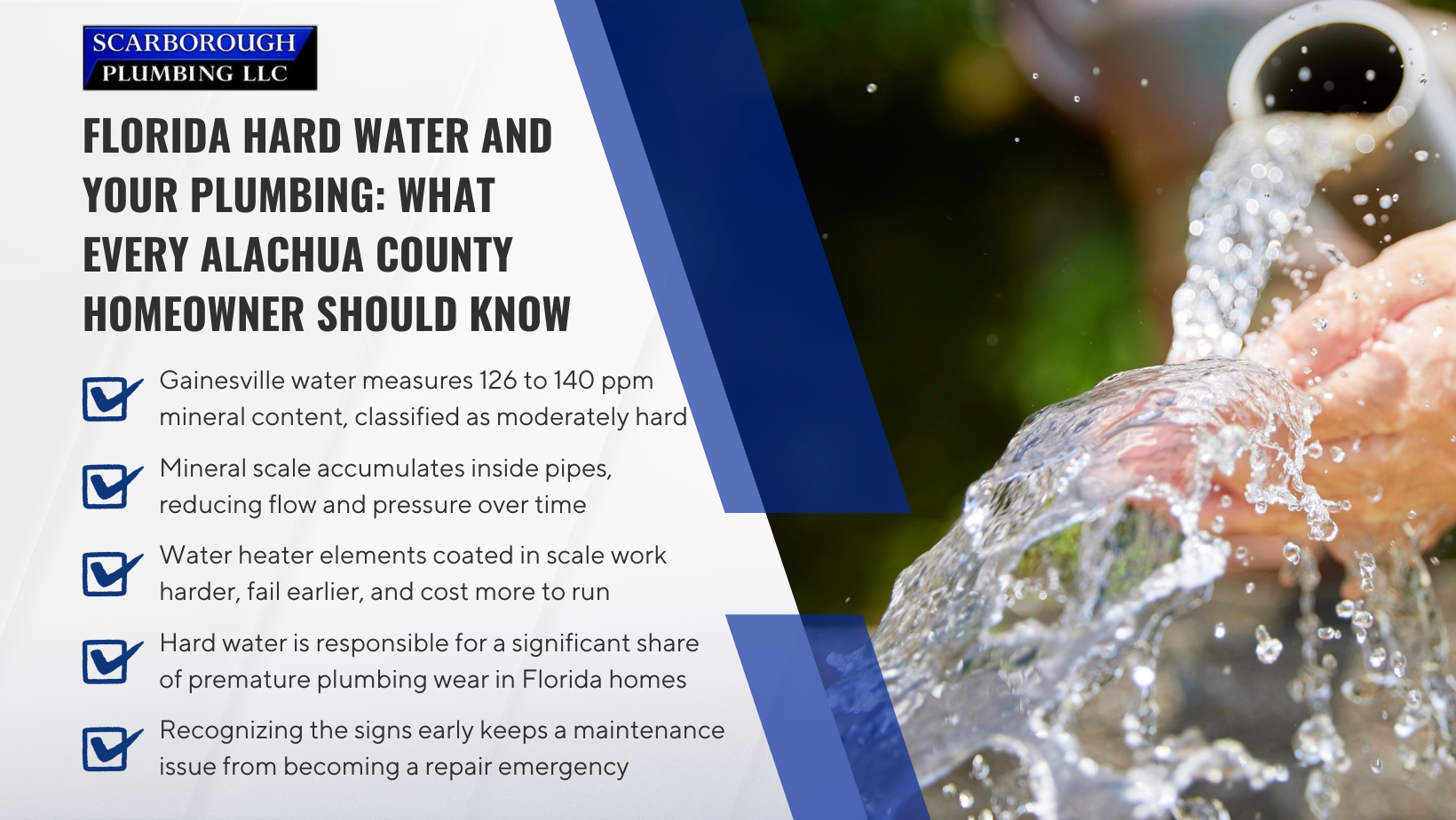
For Gainesville specifically, water hardness typically measures between 126 and 140 parts per million of mineral content, placing it in the moderately hard category. That is lower than some parts of coastal and southern Florida, where measurements exceed 200 ppm and climb significantly higher. But 126 to 140 ppm is still sufficient to produce meaningful scale accumulation inside residential plumbing systems over months and years of continuous exposure.

Rural properties in Newberry, Alachua, and High Springs that draw from private wells rather than the municipal supply frequently encounter higher mineral concentrations, since well water from the Floridan Aquifer has not gone through the municipal treatment process that partially addresses hardness before distribution.

What Hard Water Actually Does Inside Residential Plumbing

The mechanism by which hard water damages plumbing is specific and progressive. It does not happen all at once. It happens gradually over years, which is why homeowners often attribute the symptoms to aging fixtures or normal wear rather than to the underlying water quality condition driving the damage.


When hard water is heated, dissolved calcium and magnesium precipitate out of the water and form solid deposits on any surface they contact. This is why the USGS specifically notes that water heaters are among the first systems to show hard water damage: heating is exactly the condition that accelerates mineral precipitation. The deposits that form are called limescale, and they accumulate continuously as long as hard water flows through the system.

System affected What hard water does What the homeowner notices
Water supply pipes Limescale builds on interior pipe walls, progressively narrowing the usable diameter Gradually reduced water pressure throughout the home, particularly at upper fixtures
Water heater tank Scale coats the heating element, acting as insulation that forces the unit to work harder to heat the same volume of water Higher energy bills, longer recovery time between hot water uses, earlier failure of the heating element
Faucet aerators and showerheads Mineral deposits clog the small openings in aerator screens and showerhead nozzles Uneven spray patterns, reduced flow at individual fixtures even when main pressure is adequate
Fixture valves and cartridges Scale accumulates inside valve mechanisms, causing them to stick, fail to seal properly, or drip Dripping faucets, difficult-to-turn handles, toilets that run or fail to shut off cleanly
Water-using appliances Dishwashers, washing machines, and ice makers accumulate scale in internal valves, lines, and heating elements Shortened appliance lifespan, increased maintenance frequency, higher operating costs

The USGS documents that scale accumulation inside pipes and water heaters can reduce equipment efficiency, raise heating costs, lower the effectiveness of electric water heaters, and lead to pipe clogging over time. The progression is not dramatic in any single week or month. Over years in an Alachua County home, the cumulative effect of continuous exposure to moderately hard water is measurable in plumbing service frequency and appliance replacement cycles.

The Water Heater Problem Is Often the First Sign

Water heaters are the most immediate and measurable casualty of hard water in Gainesville area homes, and they are also the system where the financial impact of hard water damage becomes most visible.


A standard tank water heater in a home with untreated hard water accumulates scale on the heating element and on the interior floor of the tank over time. That scale layer acts as an insulating barrier between the heating element and the water it is supposed to heat. The unit has to run longer and work harder to achieve the same output temperature. Energy consumption rises. Recovery time between hot water uses extends. The heating element, now under sustained additional stress, fails sooner than the manufacturer's expected service life.


In a home with soft water, a well-maintained tank water heater typically lasts eight to twelve years. In Gainesville homes with untreated hard water, that cycle can compress meaningfully. The sediment accumulation that produces the rumbling or popping sound many Gainesville homeowners notice from their water heater is mineral scale being disturbed as the unit heats, a direct sign that scale buildup has progressed to the point of affecting performance.


Annual water heater flushing removes a significant portion of accumulated sediment before it hardens into scale that cannot be flushed. Homes in Gainesville, Newberry, and Alachua that skip this maintenance consistently are accelerating the replacement cycle on equipment that represents a significant household expense.


Scarborough Plumbing's repair services include water heater assessment, sediment flushing, and element replacement throughout Gainesville and Alachua County. The team can evaluate whether a water heater showing signs of hard water damage warrants repair or whether the scale accumulation has progressed to the point where replacement is the more practical investment.

How Scale Buildup Leads to Pipe Repair Calls

The connection between hard water and pipe repair calls is less obvious than the water heater connection but ultimately more expensive when it progresses to its later stages.


Scale accumulation on interior pipe walls begins narrowing the effective diameter of the pipe from the moment hard water starts flowing through it. In the early years, this has no perceptible effect. Over a decade or more of continuous exposure in an Alachua County home, the narrowing becomes measurable as reduced flow and pressure, particularly in hot water lines where heating accelerates mineral precipitation.


In older galvanized steel pipes, which are still present in a portion of the housing stock in established Gainesville neighborhoods, this process is significantly accelerated. Galvanized pipe interiors have a rougher surface than copper or PEX, which gives scale more surface area to adhere to and compounds with the natural corrosion process already occurring in aging steel.


In copper and PEX pipes, the primary concern is that scale buildup can trap corrosive agents against the pipe wall. The rough interior surface of accumulated scale creates turbulent water flow that works against the pipe material continuously. Pinhole leaks in copper pipes in Gainesville homes are frequently the result of this localized corrosion process accelerated by scale.


The point at which scale progression leads to a repair call varies, but the patterns Scarborough Plumbing sees most consistently across Gainesville, Newberry, High Springs, and Alachua include:


  • Recurrent faucet or valve repairs on fixtures that should not need this level of attention
  • Water pressure that has declined gradually with no obvious cause like a single failed component
  • Water heater sediment problems that return quickly after flushing
  • Multiple pinhole leaks in copper supply lines over a relatively short period


When multiple pipes in different locations are failing within a few years of each other in a home that is fifteen or twenty years old, the diagnosis is often less about individual component failure and more about a plumbing system that has been under sustained hard water stress throughout its service life. That pattern is frequently the point at which repiping services become the more practical long-term answer over continued patchwork repair.

What Homeowners in Gainesville Can Do About Hard Water

Hard water in Alachua County is not a problem with a single solution. The right response depends on how far the scale accumulation has progressed and what the homeowner's priorities are.


Annual water heater maintenance. Flushing the water heater once a year removes accumulated sediment before it hardens into scale that cannot be flushed. This is the highest-impact single maintenance action for Gainesville homeowners with hard water and the most cost-effective way to extend water heater service life. Scarborough Plumbing includes water heater assessment as part of its maintenance and repair services throughout Gainesville and Alachua County.


Faucet aerator and showerhead maintenance. Aerator screens and showerhead nozzles in Gainesville homes accumulate mineral deposits and need periodic cleaning or replacement. Most aerators can be unscrewed and soaked in white vinegar to dissolve scale. This is a maintenance item that prevents the symptom of reduced flow from progressing to fixture cartridge or valve damage.


Water softening or conditioning. A whole-house water softener uses ion exchange to remove calcium and magnesium from the water before it enters the home's plumbing system, eliminating the source of scale accumulation. This is the most comprehensive approach for homeowners who want to address hard water proactively rather than managing its effects reactively. Scarborough Plumbing's plumbing installations service covers water filtration and conditioning system installation throughout the service area.


Assessment after persistent symptoms. Homeowners who are experiencing recurrent repairs, unexplained pressure loss, or multiple fixture failures within a short period benefit from a professional assessment that evaluates the full plumbing system rather than addressing each symptom individually. That assessment is what determines whether the right answer is continued repair, targeted pipe replacement, or a more comprehensive repiping evaluation.


For homeowners across Gainesville, Newberry, Alachua, and High Springs who have questions about what hard water may be doing to their plumbing system, Scarborough Plumbing provides honest assessments with transparent pricing before any work begins.

Frequently Asked Questions

  • How do I know if my Gainesville home has hard water?

    All homes drawing from the Gainesville Regional Utilities municipal supply receive water from the Floridan Aquifer with a hardness of 126 to 140 ppm. The most visible signs at home are white or yellowish mineral deposits around faucets, drains, and showerheads, spots on dishes after washing, and soap that does not lather easily. Homes in Newberry, Alachua, and High Springs on private wells may have higher mineral concentrations and should have their water tested to establish an exact hardness reading.

  • Can hard water actually cause pipes to fail in a relatively new home?

    Yes, though the timeline depends on water hardness, pipe material, and whether any mitigation measures are in place. In homes with copper supply lines and untreated moderately hard water, pinhole leaks from scale-accelerated corrosion can appear within ten to fifteen years. Older galvanized steel pipes show hard water damage on a faster timeline. Homes that have experienced one pinhole leak in copper supply lines should have the full system assessed, since the conditions producing that leak are affecting all the copper in the home simultaneously.

  • Why does my water heater keep failing earlier than it should in Gainesville?

    The most common cause of premature water heater failure in Alachua County homes is scale accumulation on the heating element and the interior of the tank. The element has to work harder to heat through the insulating scale layer, which increases wear and shortens service life. Annual flushing removes sediment before it hardens. If the water heater is already producing a rumbling sound during heating cycles, sediment accumulation has progressed to the point where flushing may provide only temporary relief and a professional assessment is warranted.

  • What is the difference between a water softener and a whole-house water filter?

    A water softener specifically targets water hardness by removing calcium and magnesium through an ion exchange process. It addresses the root cause of scale accumulation. A whole-house water filter addresses a broader range of water quality concerns, including sediment, chlorine, and certain contaminants, but does not necessarily reduce water hardness. For Gainesville homeowners whose primary concern is protecting plumbing and appliances from scale, a water softener is the more targeted solution. Scarborough Plumbing can advise on the right system for a specific home and water quality profile during an on-site assessment.

  • How do I know if my plumbing needs repair or full repiping?

    Isolated incidents, a single faucet cartridge failure, one pinhole leak, one showerhead replacement, are repair situations. The pattern that points toward repiping is multiple failures appearing in different locations within a relatively short period, persistent low pressure with no single identified cause, or a water heater that has failed ahead of its expected service life alongside other pipe-related symptoms. Scarborough Plumbing's team assesses the full system rather than each individual symptom to give homeowners an honest recommendation on which approach makes the most practical sense for their specific situation.

  • Does Scarborough Plumbing serve Newberry, Alachua, and High Springs in addition to Gainesville?

    Yes. Scarborough Plumbing serves residential and commercial properties throughout Gainesville and the surrounding Alachua County communities, including Newberry, Alachua, High Springs, and beyond. The same licensed plumbers, transparent pricing, and quality workmanship standard that Gainesville homeowners have relied on since 2010 apply across the full service area.

If you are noticing reduced water pressure, recurring fixture repairs, water heater performance issues, or any of the other signs of hard water damage in your Gainesville, Newberry, Alachua, or High Springs home, Scarborough Plumbing can assess the situation and give you a clear picture of what is actually happening inside your plumbing system.


Our Plumbing Services

Repair Services

Repiping Services

Plumbing Installations

Contact Scarborough Plumbing

Recent Posts

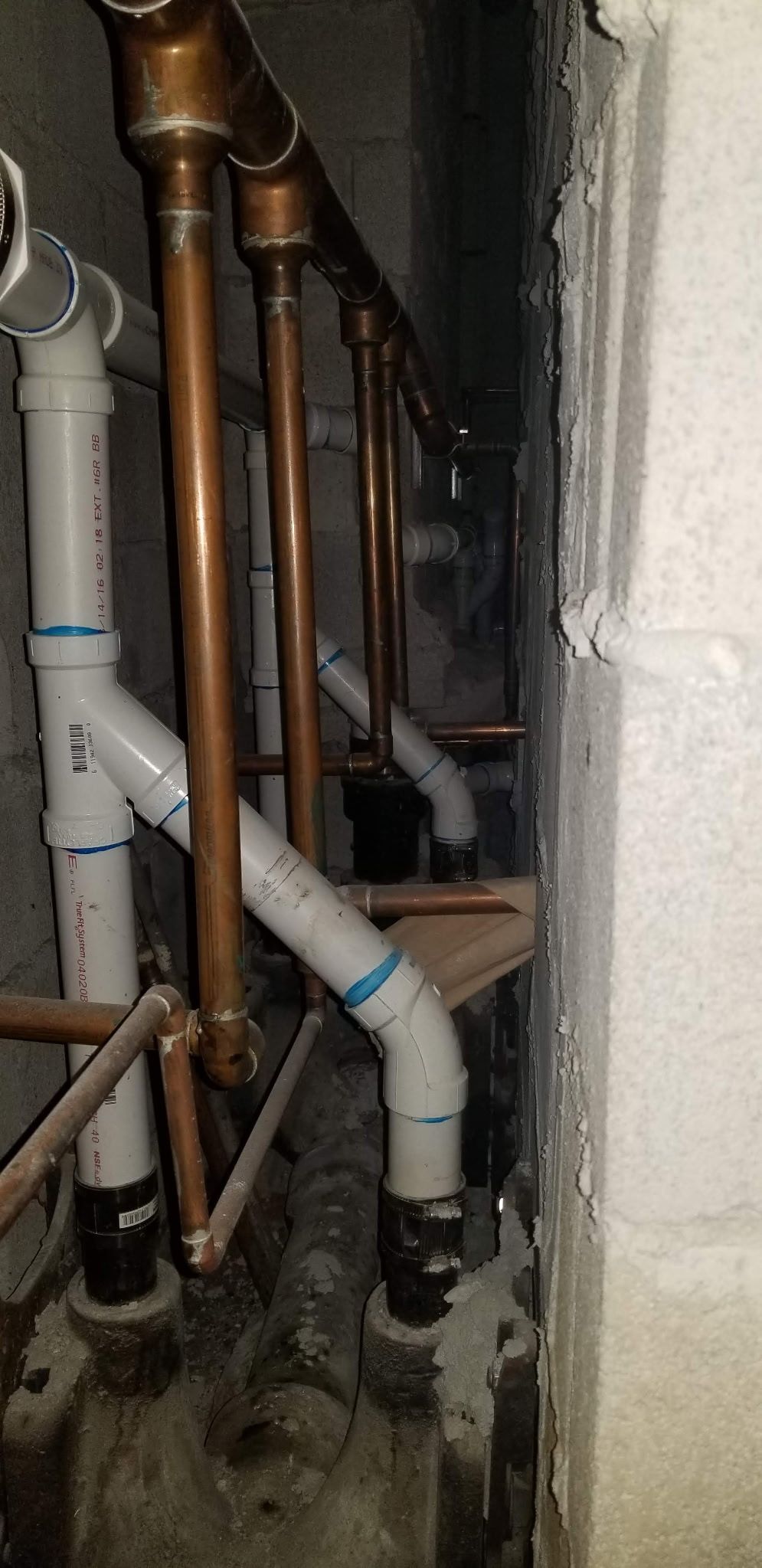
Copper pipes and white PVC plumbing running vertically in a narrow utility space against a concrete wall.
July 14, 2026
Not every pipe problem in a Gainesville FL home is a replacement job. And not every repair will hold. Scarborough Plumbing explains exactly how the repair vs replacement decision gets made and what Florida homeowners need to know before they choose.
Backyard trench excavation beside a house, with piles of dirt and exposed soil in bright sunlight
July 9, 2026
Most plumbing problems in Gainesville FL homes give you warning before they become emergencies. Scarborough Plumbing explains the 7 signs that mean it is time to call a licensed plumber now, not later.
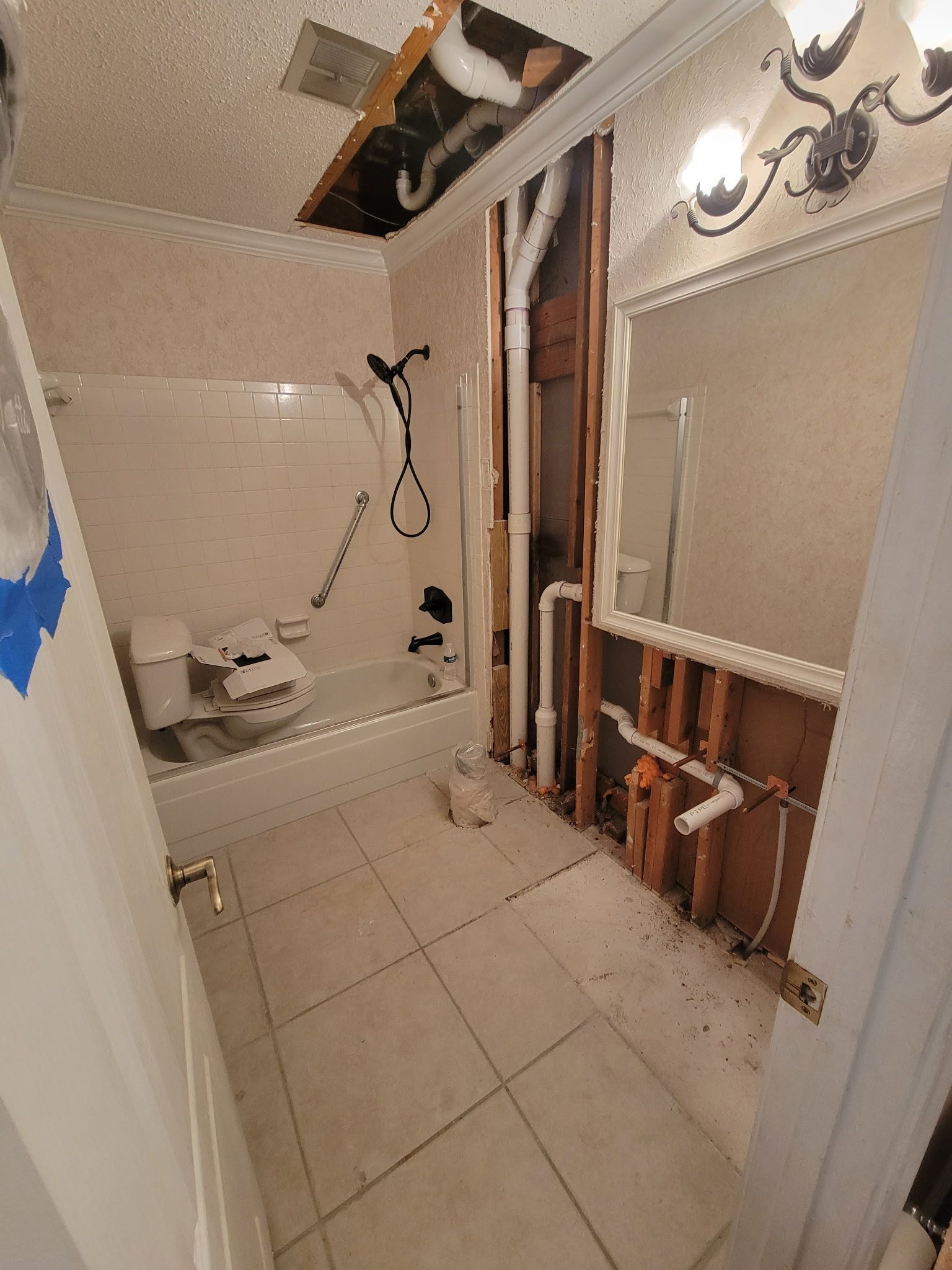
Partially gutted bathroom with exposed plumbing, broken wall panels, and tiled floor under renovation
June 30, 2026
A running or broken toilet in your Gainesville FL home is not always a replacement job. Scarborough Plumbing explains which toilet problems are simple repairs, which warrant replacement, and what each option costs.
Worker tightening a brass pipe fitting under a sink with a wrench in a cramped utility space
May 6, 2026
Low water pressure in your Gainesville home is frustrating — and it rarely fixes itself. Scarborough Plumbing explains the most common causes and when it's time to call a plumber.
Worker in orange vest inspecting pipes in a narrow trench at a construction site.
April 29, 2026
Sewer line problems in Gainesville FL move fast. Scarborough Plumbing explains the signs, causes, repair vs. replacement options, and what it costs in this market.
Black corrugated pipes laid in a trench along a yard near a house on a sunny day
April 22, 2026
Decided to repipe your Gainesville FL home but not sure what to expect? Scarborough Plumbing walks you through the complete process from Day 1 through final inspection.
A technician in white gloves assembles complex metal plumbing and heating valves on a training rack.
April 15, 2026
Not sure if you need pipe replacement or full repiping in Gainesville FL? Scarborough Plumbing explains the difference, the signs, and what it costs in this market.
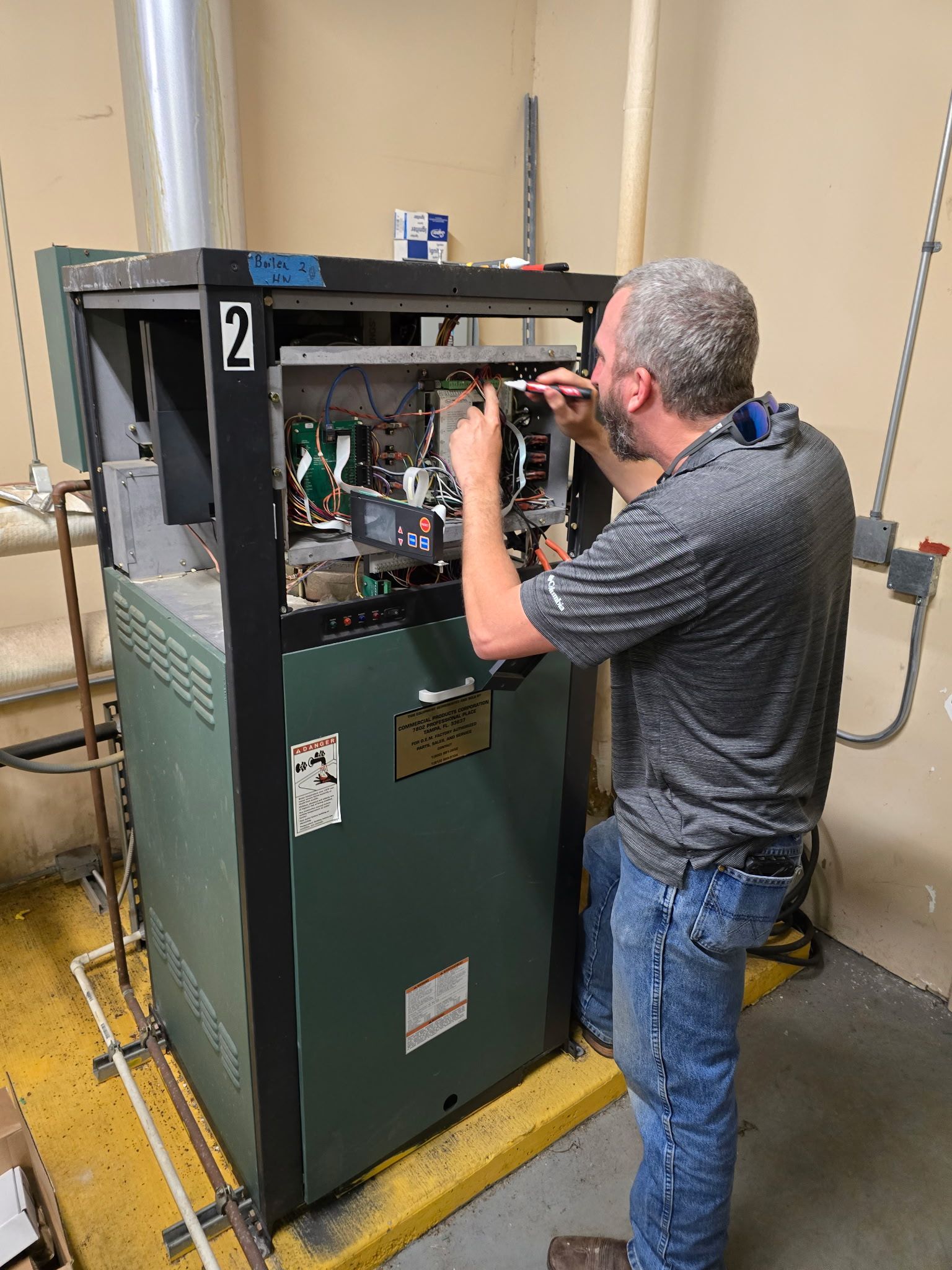
A technician in a grey shirt repairs the internal electrical components of an industrial heater unit in a utility room.
April 8, 2026
Hidden leaks in Gainesville FL cause serious damage before most homeowners notice. Scarborough Plumbing explains the warning signs and how professional leak detection works.
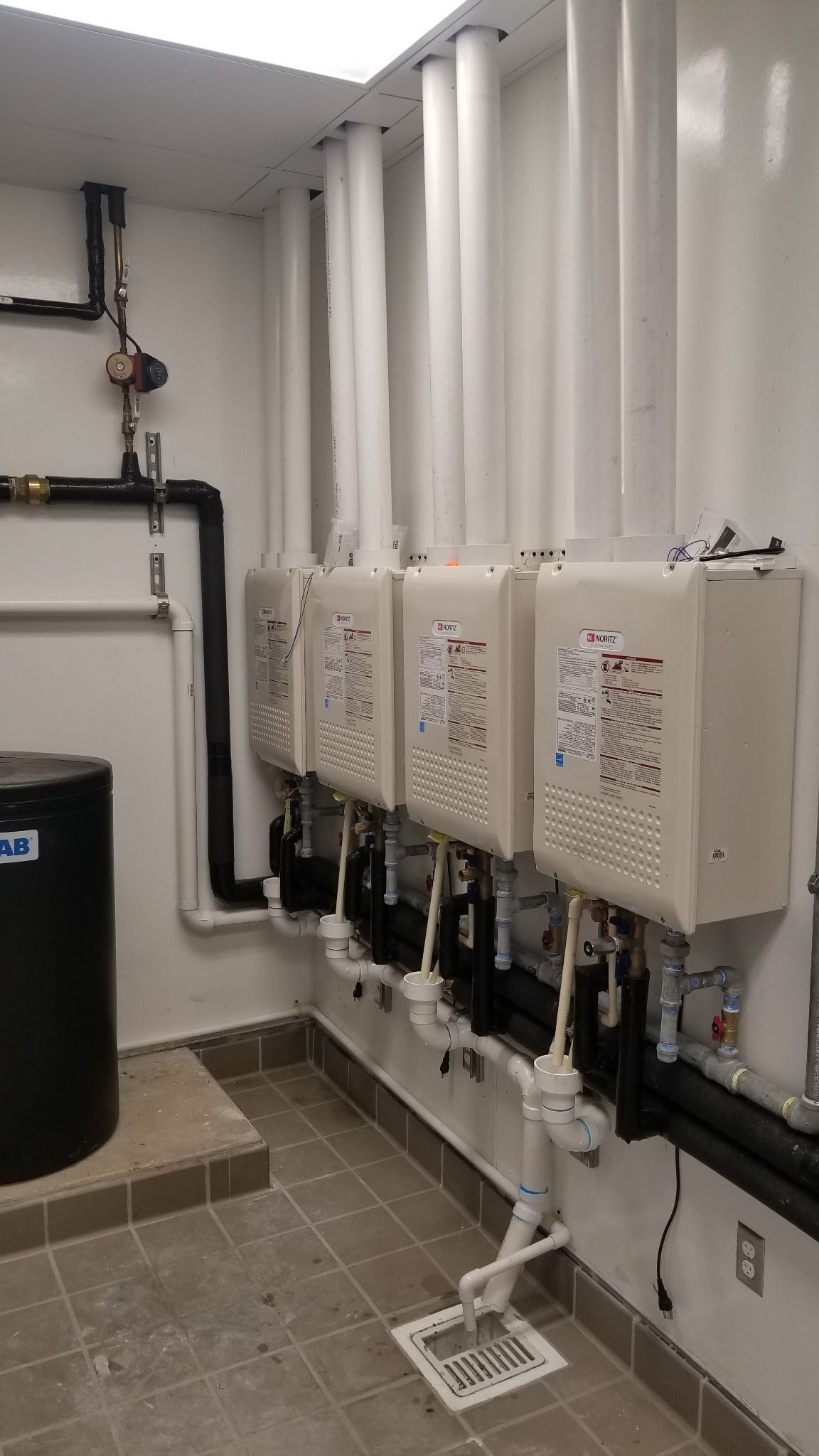
Four wall-mounted white tankless water heaters installed in a utility room with white pipes and tiled flooring.
April 1, 2026
Not sure whether to repair or replace your water heater in Gainesville FL? Scarborough Plumbing breaks down the signs, the costs, and how Florida's hard water affects your decision.
Drain cleaning plumber Gainesville FL Scarborough Plumbing clogged pipes
March 25, 2026
Slow or recurring drains in your Gainesville FL home? Scarborough Plumbing explains what's really causing the problem and when it's time to call a professional drain cleaning plumber.
Show More

Experience Expert Plumbing Services You Can Trust

When you need reliable plumbing solutions in Gainesville, Scarborough Plumbing is here to help. Our experienced team is ready to tackle any plumbing challenge, from routine maintenance to complex installations and everything in between. We pride ourselves on delivering honest, professional service with transparent pricing and quality workmanship that lasts. Don't let plumbing issues disrupt your day. Contact Scarborough Plumbing now and discover why Gainesville residents and businesses have trusted us since 2010 for all their plumbing needs.