Drain Cleaning vs Sewer Line Repair: Which Fixes Recurring Backups During Florida’s Wet Season?
The Warning Signs Are Usually More Than Just Leaks
A drain that backs up once may have a removable obstruction. A line that slows repeatedly, affects several fixtures, or reacts whenever heavy rain arrives may have a deeper problem. The choice between drain cleaning vs sewer line repair depends on whether the pipe is blocked, structurally damaged, or dealing with both conditions at the same time.
For Gainesville homeowners, the useful question is not which service sounds stronger. It is what a camera inspection and drainage pattern reveal. Cleaning restores flow through an intact line. Repair corrects a physical defect that cleaning cannot remove. That same framework applies across Newberry, Alachua, and High Springs, where wet-weather symptoms may expose reduced sewer capacity, root intrusion, or deteriorated underground piping.
Why Wet-Season Backups Need a Root-Cause Decision
Heavy rain does not create the hair, grease, scale, wipes, or foreign objects already inside a household drain. It can, however, expose a system that was operating with little remaining capacity. A partially blocked lateral may work during ordinary use, then gurgle, slow down, or back up when groundwater and downstream conditions change.
As September shifts toward October, it is worth tracking whether drainage symptoms occur only during intense rain, continue after the weather clears, or also happen on dry days. That timing does not diagnose the pipe by itself, but it gives the plumber useful evidence. A sewer backup after heavy rain that affects several fixtures deserves a different investigation from one bathroom sink that drains slowly all year.
The City of Gainesville’s FloodWise assessment explains that high-rain events can increase inflow and infiltration into wastewater collection systems and may push system capacity. At the property level, cracks, loose joints, roots, or buildup can make a private sewer lateral more sensitive to those conditions. Rain may be the trigger that reveals the restriction, not the original cause of it.
Drain Cleaning vs Sewer Line Repair: What Is the Difference?
Drain cleaning removes an obstruction or buildup so wastewater can move through a pipe that remains serviceable. Sewer line repair corrects a structural defect such as a crack, separated joint, collapsed section, severe corrosion, or improper slope. A line can need cleaning before it can be inspected fully, and it can need repair after the obstruction is removed.
| Decision point | Drain cleaning | Sewer line repair |
|---|---|---|
| Main problem | Grease, hair, scale, debris, a foreign object, or removable root growth | Crack, offset joint, collapse, belly, corrosion, or recurring root entry through damaged pipe |
| Primary goal | Restore the inside diameter and normal flow | Restore the pipe’s structure, alignment, or watertight condition |
| Typical methods | Snaking, main-line clearing, or hydro jetting when pipe condition allows | Spot repair, pipe lining, pipe bursting, partial replacement, or full replacement when necessary |
| Best evidence | Camera shows buildup or obstruction in an otherwise usable line | Camera shows physical damage or standing water caused by a defect in the line |
| Effect on recurrence | Can solve buildup-related backups, but cannot seal a crack or straighten a belly | Addresses the defect that keeps collecting waste or allowing roots and groundwater to enter |
| Property disruption | Usually limited to cleanout or fixture access | Varies from targeted access to excavation or trenchless work |
| Right outcome | The line is open, clean enough for the condition, and draining normally | The damaged section is repaired and flow is verified |
This distinction prevents two expensive mistakes. The first is repairing a structurally sound line that only needed main drain cleaning. The second is paying to clear the same damaged section repeatedly when the pipe itself keeps causing the blockage.
When Drain Cleaning Is the Right Fix
Drain cleaning makes sense when the obstruction is the problem and the pipe around it is still functional. A first-time clog in one sink, shower, or toilet often falls into this category. So can a main-line blockage caused by accumulated grease, mineral scale, organic buildup, or an object that can be removed without changing the pipe.
Professional cleaning is also appropriate when roots have entered the line but inspection shows that the pipe remains structurally suitable for cleaning. The method matters. Snaking can break through or retrieve a localized clog. Hydro jetting can remove certain deposits from the pipe walls and clear some root growth, but only after the line’s condition is evaluated. High-pressure cleaning is not automatically appropriate for badly corroded cast iron, displaced clay joints, or a weakened section.
Scarborough Plumbing’s Gainesville drain-cleaning service looks at the number of affected fixtures, the history of the clog, pipe material, access, and camera findings before choosing a method. If cleaning restores flow and the footage shows no structural failure, adding a repair would not match the evidence.
When Sewer Line Repair Becomes Necessary
Choose sewer line repair when the pipe has a defect that cleaning cannot correct. A cable or water jet may temporarily move debris through a cracked or offset line, but it cannot reconnect a separated joint, lift a sagging section, rebuild a collapsed wall, or stop groundwater from entering through damaged piping.
Stronger repair indicators include a clog returning at the same location after proper cleaning, roots repeatedly entering through the same opening, standing water visible in a pipe belly, advanced corrosion, broken pipe walls, leakage into the yard, or a camera that cannot pass a collapsed section. Persistent sewage odor outdoors, an unexplained wet patch, or soil settling over the sewer route also deserves investigation, although none of these signs proves the exact defect without inspection.
The Florida Department of Environmental Protection identifies rainfall infiltration, blocked or broken pipes, roots, shifted joints, sediment, and aging infrastructure among factors that contribute to sewer backups and overflows. That combination is why a clogged sewer line may require both clearing and repair. Removing the blockage restores access and flow; repairing the damaged section addresses why the problem keeps returning.
How a Camera Inspection Guides the Next Step
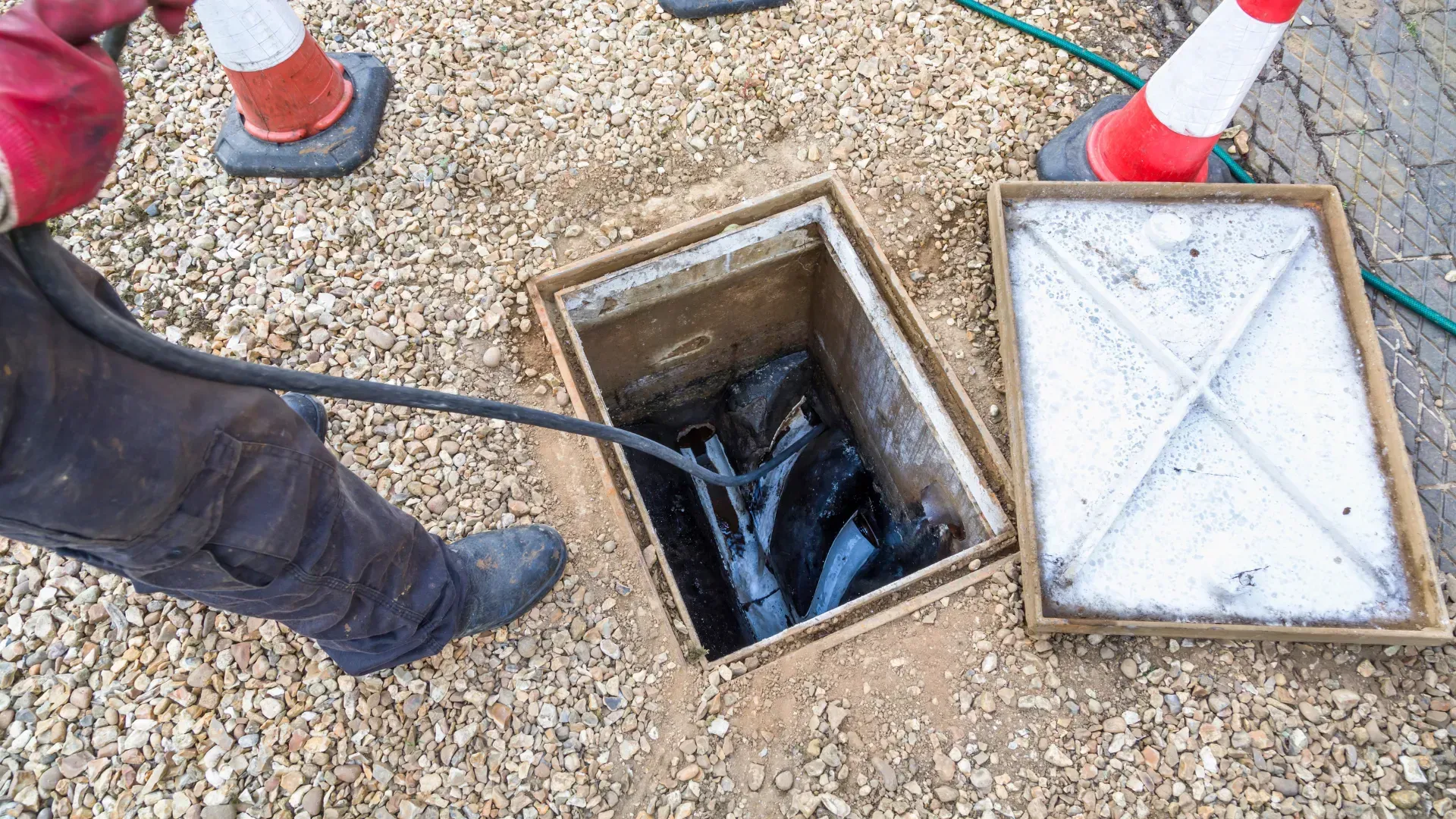
A sewer camera changes the conversation from symptoms to evidence. Inserted through an appropriate cleanout or access point, it can reveal grease coating, root masses, foreign material, corrosion, cracks, joint offsets, standing water, and collapsed sections. Location equipment can also help identify where a defect sits beneath the property before repair planning begins.
Camera footage has limits. If a line is completely blocked or full of murky water, the lens may not provide a usable view beyond the obstruction. A plumber may need to open or partially clean the line first, then inspect the full run. The goal is still the same: avoid recommending structural work from symptoms alone and avoid declaring a damaged line fixed merely because water moves again.
Scarborough Plumbing’s published sewer-line repair process uses camera inspection before a repair or replacement recommendation. We assess what failed, where it failed, how much pipe is affected, and whether the surrounding line remains sound. When a targeted repair is sufficient, the scope should stay targeted. When damage extends through multiple sections, the recommendation should explain why a broader repair or replacement is more practical.
What the Pattern of a Recurring Backup Can Reveal
The sequence of symptoms often narrows the possibilities before equipment enters the line. It should guide the inspection, not replace it.
The Backup Returns Soon After Cleaning
A recurring drain backup after a basic clearing may mean the original service created a path through buildup without fully removing it. It can also mean roots, a pipe belly, an offset joint, or deteriorated material keeps catching waste. Ask what was removed, whether the line was camera-inspected afterward, and whether the recurrence is at the same fixture or throughout the home.
Several Fixtures React During Heavy Rain
When a toilet gurgles, a shower slows, and water rises at the lowest drain during the same rain event, the main line deserves attention. In Gainesville or nearby Alachua, saturated conditions may expose a marginal private lateral or a downstream wastewater-system issue. In Newberry and High Springs, first confirm whether the property uses municipal sewer or a septic system because a saturated drainfield requires a different specialist and response.
One Fixture Is Slow but the Rest Stay Normal
One slow sink or shower usually points toward a local branch, trap, or fixture blockage. That pattern generally supports targeted cleaning before sewer-line work. If the same fixture keeps backing up despite thorough cleaning, the investigation may need to move farther downstream or consider improper slope, damaged branch piping, or venting.
What to Do During a Sewer Backup After Heavy Rain
If wastewater is rising or entering the home, protect people and the property before trying to identify the exact cause. Take these practical steps:
- Stop using water indoors. Do not run sinks, showers, dishwashers, or washing machines while the system is backing up.
- Avoid repeated test flushing. Each flush adds water to a line that may already be full.
- Keep people and pets away. Wastewater can contain contaminants and should not be handled like ordinary rainwater.
- Skip chemical drain cleaners. They will not repair a broken lateral and can leave hazardous chemicals in standing wastewater.
- Document the pattern safely. Note the affected fixtures, rainfall timing, odors, yard changes, and where water first appeared.
- Call for diagnosis. A plumber can assess the private drain and sewer line; report a suspected public-system problem to the appropriate utility.
If the home is on septic, reduce water use and arrange the appropriate septic evaluation after conditions allow. Drain cleaning inside the house will not correct a saturated drainfield. If the property is on municipal sewer, the plumber can determine whether the issue appears to be within the private lateral and advise when utility involvement is appropriate.
What Drain Cleaning and Sewer Line Repair Cost
Cost depends on access, blockage type, pipe material, depth, line length, camera findings, cleaning method, repair method, excavation, surface restoration, and permits. A service that clears one accessible branch line is not comparable to repairing buried pipe beneath a driveway or mature landscaping.
Estimated 2026 Market Context
| Service or charge | 2026 pricing context | What the figure means |
|---|---|---|
| Scarborough Plumbing minimum service call | $225 | Our current minimum includes up to one hour of labor, plus materials |
| Additional Scarborough labor | $45 per 15 minutes | Applies after the first included hour |
| Professional drain cleaning | $147–$352, with a $246 national average | Angi’s national planning range, not a Gainesville-specific quote |
| Sewer line repair | $150–$3,800 | HomeGuide’s broad national repair range; method and damage determine placement within it |
| Sewer line replacement | $2,000–$10,000 for about 40 feet | National planning context when repair is not sufficient, not a Scarborough project quote |
Scarborough’s current service-call pricing is published in its professional vs DIY drain-cleaning guide. The broader figures come from Angi’s 2026 drain-cleaning cost guide and HomeGuide’s sewer-line repair and replacement guide.
The best cost comparison starts with the same diagnosis. Ask whether the proposed scope includes camera inspection, line locating, cleaning, post-cleaning verification, permits, excavation, pipe materials, testing, and restoration of disturbed surfaces. A low clearing price is not a long-term value if structural damage guarantees another backup. A large repair is not justified when footage shows an intact pipe with removable buildup.
Frequently Asked Questions
Can drain cleaning permanently fix a recurring drain backup?
Yes, when recurring buildup is the true cause and the pipe remains structurally sound. It will not permanently fix a belly, collapsed section, separated joint, or crack that keeps admitting roots and groundwater. Camera findings help distinguish those situations.
Does a backup during heavy rain mean my sewer line is broken?
Not automatically. Heavy rain can expose a partial blockage, increase infiltration into a damaged lateral, affect downstream sewer conditions, or saturate a septic drainfield. Compare wet- and dry-weather behavior, then inspect the relevant system before deciding on repair.
Is a camera inspection always required before main drain cleaning?
Not for every simple, first-time fixture clog. It becomes more useful when several drains are affected, the blockage keeps returning, roots or damaged pipe are suspected, or repair is being considered. A fully blocked line may need limited clearing before useful footage is possible.
Can roots be removed without repairing the sewer line?
Sometimes. Root growth can be cleared when the pipe is stable enough, but roots entered through a joint or opening. If that defect remains, regrowth is possible. The footage should show whether cleaning, a maintenance plan, lining, or physical repair is the sensible next step.
How can I tell whether the problem is sewer or septic?
Confirm which wastewater system serves the property. A plumber can evaluate household drains and the private sewer lateral. A septic professional should assess the tank and drainfield when saturation, pumping, or onsite treatment is involved. The same gurgling symptom can lead to different solutions.
Does Scarborough Plumbing handle both drain cleaning and sewer repair?
Yes. Scarborough Plumbing provides drain assessment, snaking, hydro jetting when appropriate, camera inspection, main-line clearing, and sewer-line repair for Gainesville and surrounding service areas, including Newberry, Alachua, and High Springs. We match the recommendation to the blockage and pipe condition instead of assuming every backup needs the same service.
Choose the Fix That Matches the Pipe Condition
The right answer in drain cleaning vs sewer line repair comes from separating restricted flow from structural failure. Cleaning is the efficient choice when buildup or an obstruction is inside a usable pipe. Repair is the durable choice when cracks, displacement, corrosion, collapse, or improper slope keeps recreating the problem. Some homes need both in sequence so the line can be opened, inspected, and corrected.
If your Gainesville home has a recurring drain backup, several fixtures slow together, or wet-weather symptoms keep returning, contact Scarborough Plumbing. We will review the pattern, inspect the line when appropriate, explain the findings, and recommend cleaning or repair based on what the system actually needs. Call (352) 472-7385 or request a free estimate online.
Sewer Line Repair in Gainesville
Professional vs DIY Drain Cleaning
Drain Snaking vs Hydro Jetting
Recent Posts

Experience Expert Plumbing Services You Can Trust
When you need reliable plumbing solutions in Gainesville, Scarborough Plumbing is here to help. Our experienced team is ready to tackle any plumbing challenge, from routine maintenance to complex installations and everything in between. We pride ourselves on delivering honest, professional service with transparent pricing and quality workmanship that lasts. Don't let plumbing issues disrupt your day. Contact Scarborough Plumbing now and discover why Gainesville residents and businesses have trusted us since 2010 for all their plumbing needs.